Yogyakarta Part II
Exploring the architectural heritage of Jogja, where ancient temples stand as enduring evidence of the strong influence of Buddhism on the worldview of the Indonesian people.
5/11/20269 min read
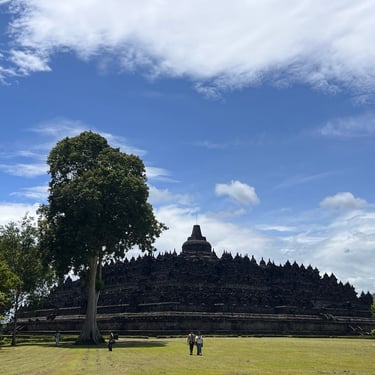
Now comes the most satisfying part, where we visited famous architecture shaped by Buddhist influence, such as Borobudur, Prambanan Temple, Sewu Temple, Ijo Temple, and Keraton Ratu Boko. It took around two hours from our hotel to Borobudur Temple, located in Jawa Tengah and enclosed within a well-maintained huge green park. We bought tickets online, went to the meeting point to wait for a buggy, were given sandals, and joined other tourists.
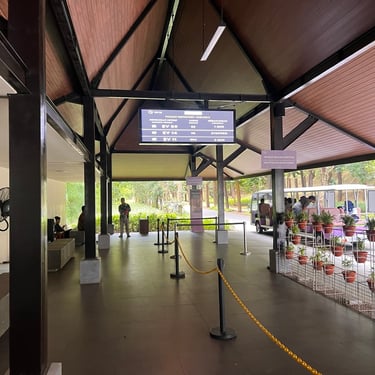
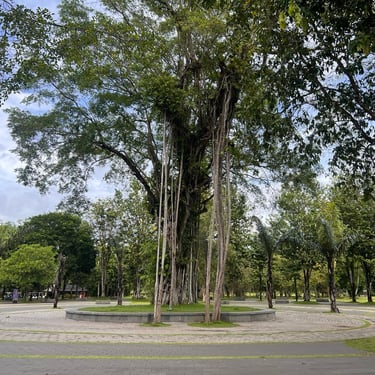
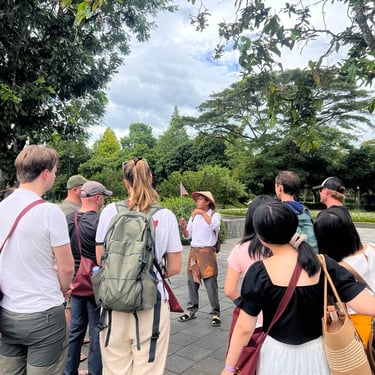
Walking dramatically towards the temple, I could not describe the feeling when I first saw Borobudur in front of my eyes, which was so impressive, gigantic, and detailed. Usually, we only see it in books, but now I got to witness this masterpiece designed with intricate motifs that chiefly reflect the ideas and narratives of Buddha.
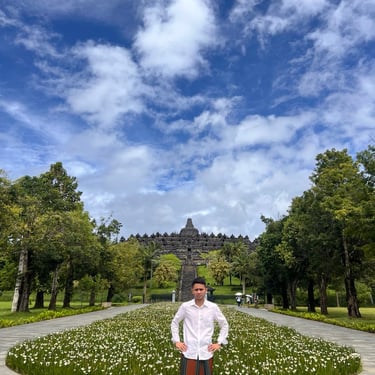
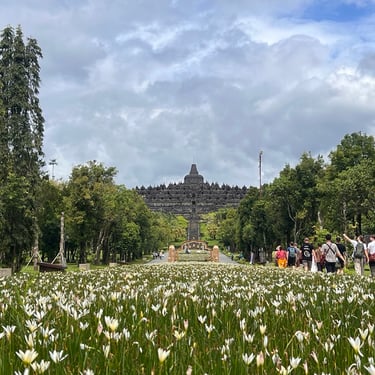
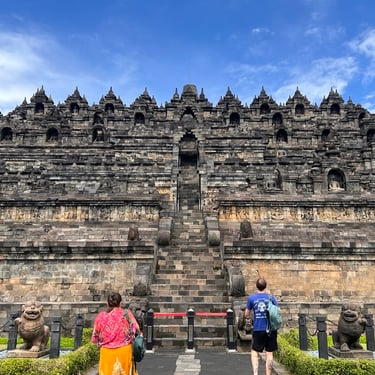
Borobudur is the world’s largest Buddhist temple and one of the most notable heritage monuments in Indonesia. It was built during the 8th-9th century under the Sailendra Dynasty in Central Java. It has four entrances: north, west, east as the main entrance, and south, symbolising the freedom of followers to perform religious activities from any direction. The entire building was made of stone, and some of which was taken from nearby forests. The monument was abandoned for centuries after the decline of Buddhism in Java and was later rediscovered in the 19th century during Dutch colonial rule. Interestingly, some of the stones here are not original, as restoration work has been done over time to preserve the structure. Today, it is recognised as a UNESCO World Heritage Site and remains an important place for Buddhist pilgrimage.
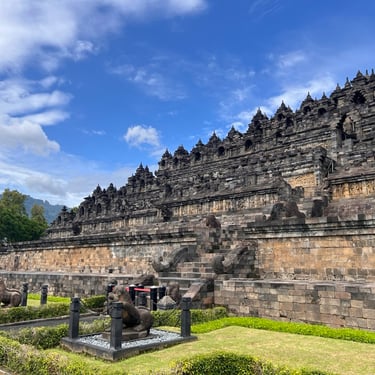
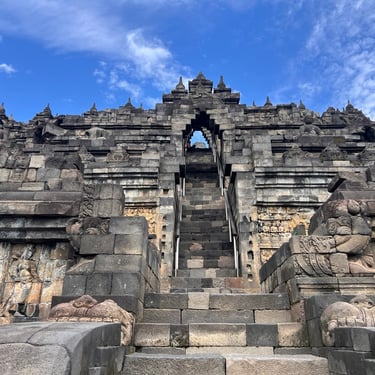
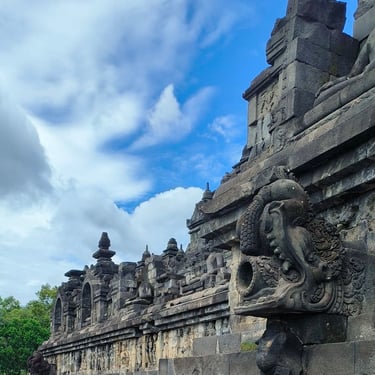
It has nine levels, each representing different stories. The guideman told us that the journey from the bottom to the top symbolises a spiritual journey from human desire at the lower levels, to wisdom and self-control in the middle, and finally to peace and enlightenment at the top. At the bottom levels, we were briefly explained about carvings on the facade that contains societal stories such as giving birth, rescuing people, wedding, trees of buddha, and life of kings.
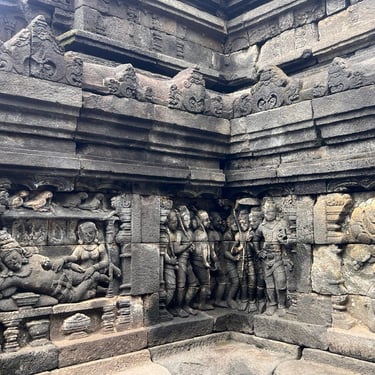
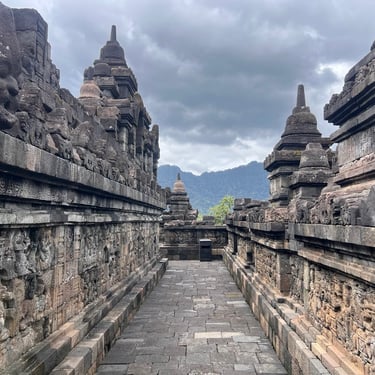
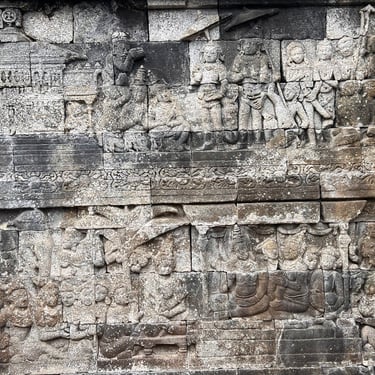
As we slowly moved upwards, the atmosphere became more serene. We began to notice Buddha statues hidden inside the stupas, implying deep concentration, discipline, and inner wisdom. Although we could only access up to the second-highest level, not the very top, we still felt the meaning of the journey. The highest point, marked by one large central stupa that represents the ultimate state of nirvana. Along the way, I also spotted familiar decorative figures like Buto Kala signifying the transition.
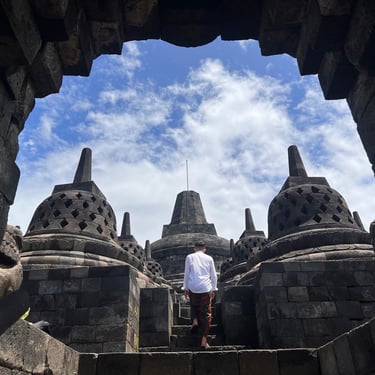
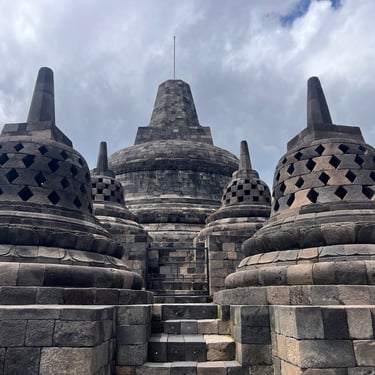
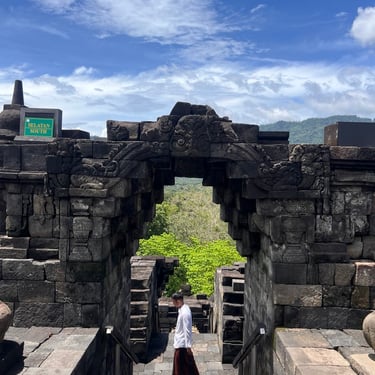
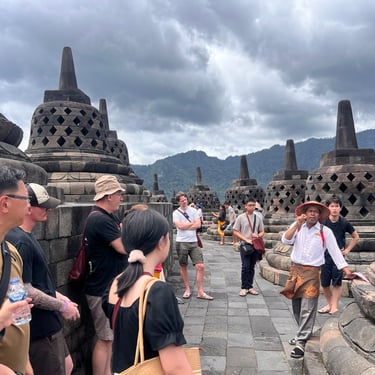
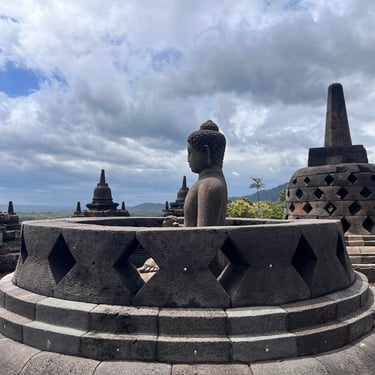
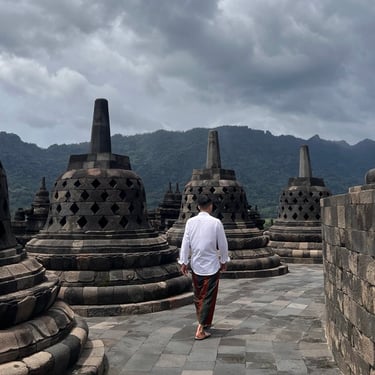
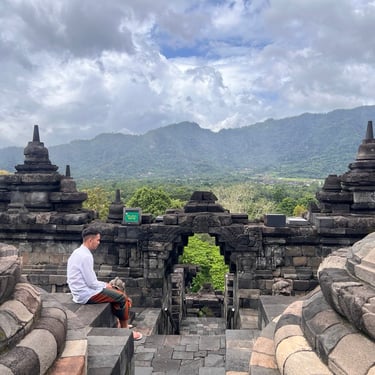
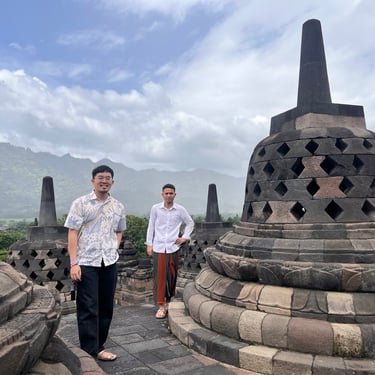
The higher I stood on the temple, the wider the surrounding landscape scenery I could see. In a straight line from one of the entrances, there were also another temple, hills, and villages. We posed and took plenty of pictures haha, and I was especially happy that day wearing a kain batik, which somehow made the experience feel even more meaningful and connected to the place. Around 12 pm, we finished touring Borobudur temple.
We moved towards Prambanan Temple that took more than one hour of journey, from Borodubur to Sleman Kabupaten. Prambanan Temple is the largest Hindu temple complex in Indonesia and one of the most impressive ancient monuments in Southeast Asia. Like Borobudur, Prambanan is also a UNESCO World Heritage Site and is admired for both its spiritual meaning and architectural beauty. It was built in the 9th century during the Mataram Kingdom and is dedicated mainly to the Hindu gods, Shiva (the destroyer), Vishnu (the preserver), and Brahma (the creator). The temple complex is famous for its tall, pointed architecture and detailed stone carvings that illustrate scenes from the Hindu epic Ramayana.
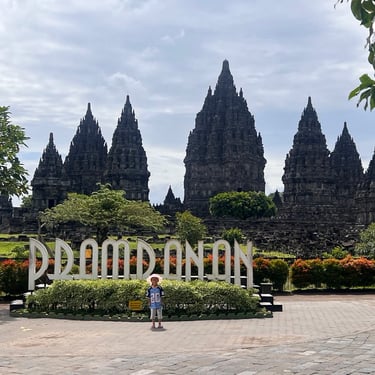
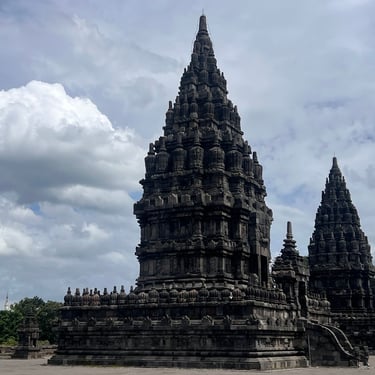
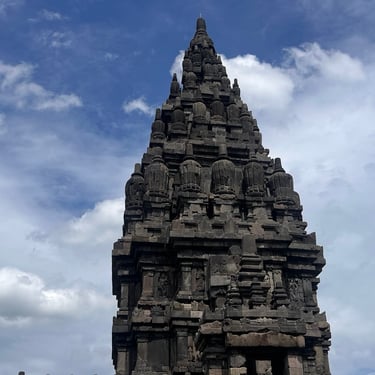
The central area is dominated by three main temples dedicated to Shiva, Vishnu, and Brahma, with the Shiva temple being the tallest and most prominent. The circulation between the temples is open and free, with the ground surface mainly covered in sand. This place has a myth in which the local villagers believe that the temples were built in just one night.
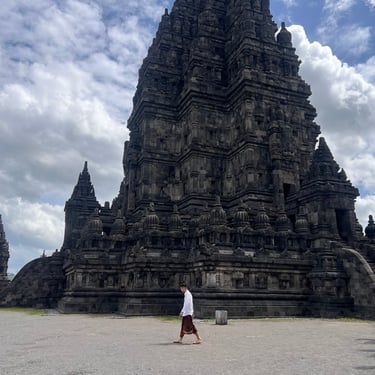
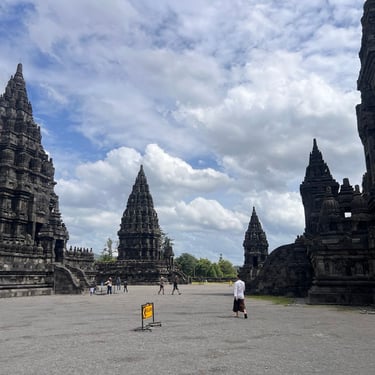
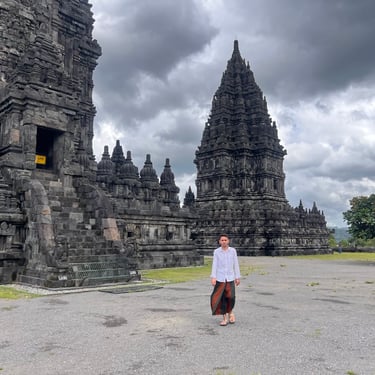
Walking inside the temple complex felt like stepping into a fantasy world filled with myth and magic. Every direction I turned, I was surrounded by complicated carvings that almost felt like they were in dialogue with us, telling something about something. Each symbol seemed alive, and the more I explored, the stronger the curiosity became to understand the symbolism.
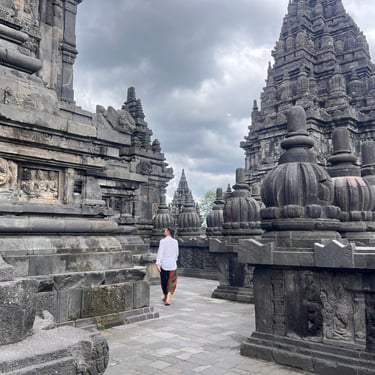
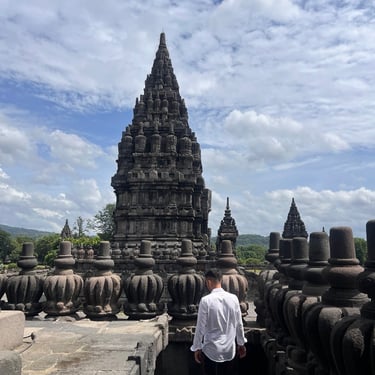
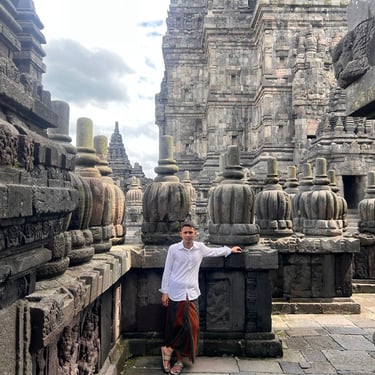
I assume that each temple offers a sense of seclusion, an intermediate space for the worldly actions with a deeper spiritual connection with the divine, free from worldly influences. Since we did not hire a guide, we explored the site freely, wandering around and taking photos every corner.
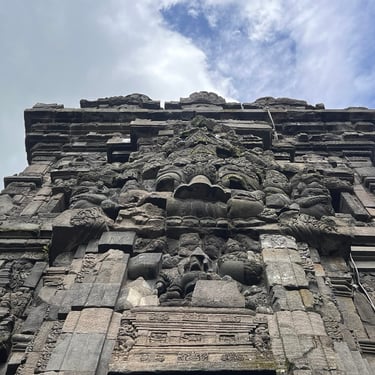
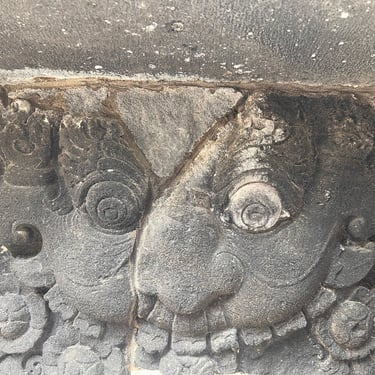
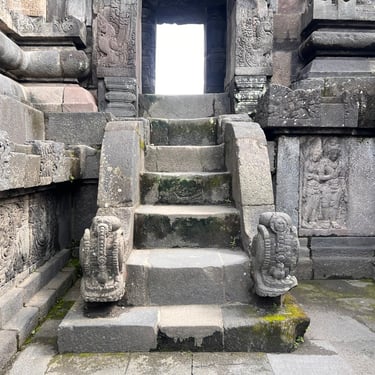
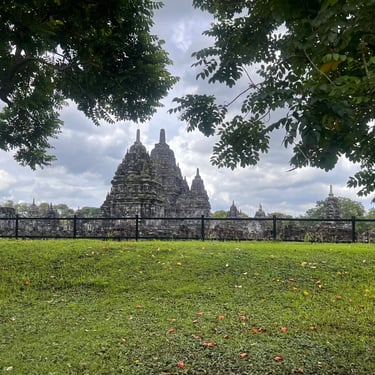
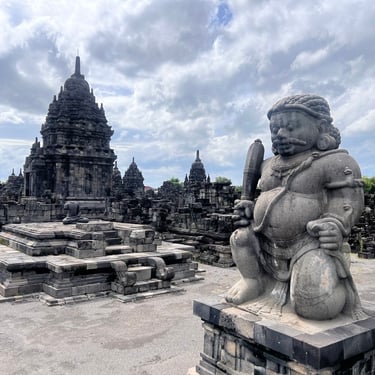
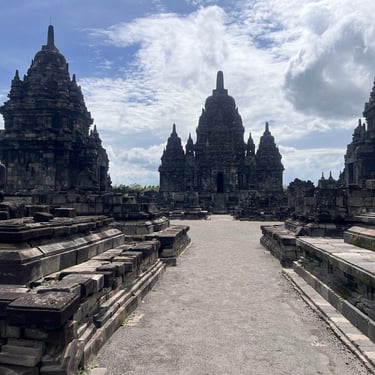
Located in the same area as Prambanan Temple, we continued our temple exploration at Sewu Temple. The site felt more like a field of collapsed structures, with relics of stone buildings spread across the area. The space had guardian statues (Dvarapala) at the main entrance that protect the sacred temples. Although partially damaged over time, Sewu still reflects impressive architectural precision and deep spiritual symbolism. However, we did not spend too much time here as the day was running short, and we needed to rush to Ijo Temple, which is about an hour away from Prambanan.
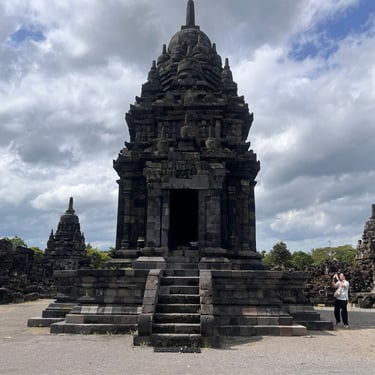
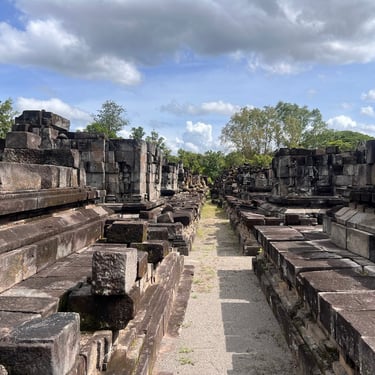
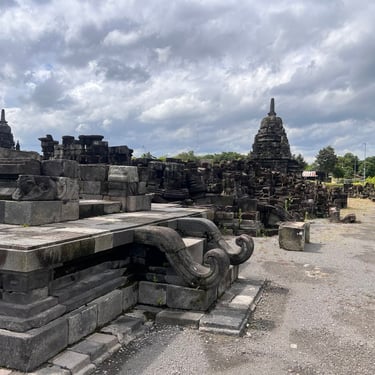
While leaving Prambanan Temple, we passed several small shops selling drinks and food. An elderly woman even said to us, “Enggak apa-apa kalau tak puasa, masuk aja minum air kelapa.” Hahaha, we were amused by her confidence in assuming we weren’t fasting, but yes, we were, so we politely refused the offer.
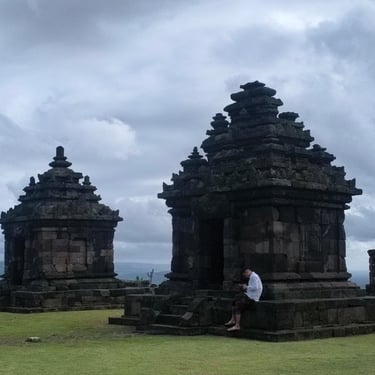
Standing at the top of an inclined hill, surrounded by villages and terraced rice fields, we finally arrived at Ijo Temple. The area was tranquil, with only us as the visitors, likely due to its remote distance. The architecture was minimalistic yet impressive, blending beautifully with the landscape. From this high point, we could see wide views of the Central Java below that has no skyscrapers at all. We spent only about 20 minutes there, taking photos and briefly entering the temple.
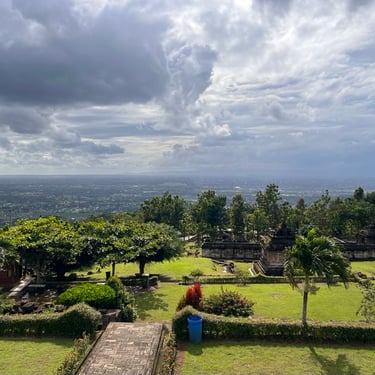
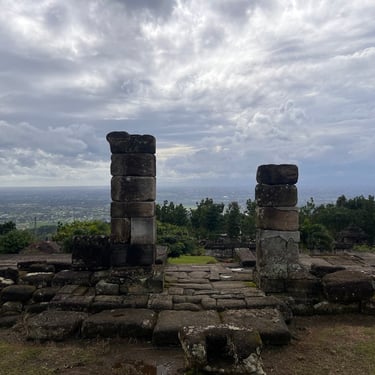
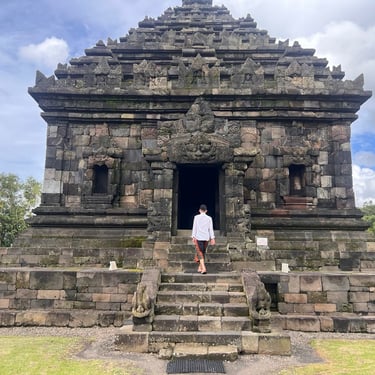
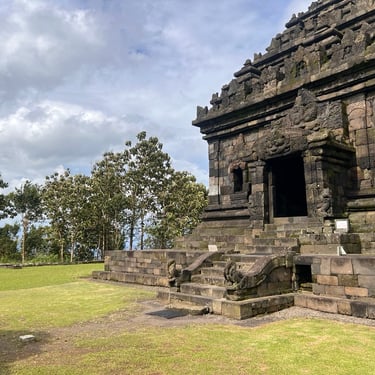
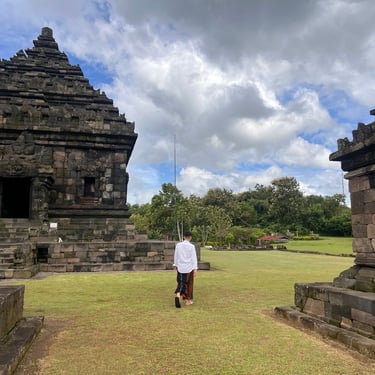
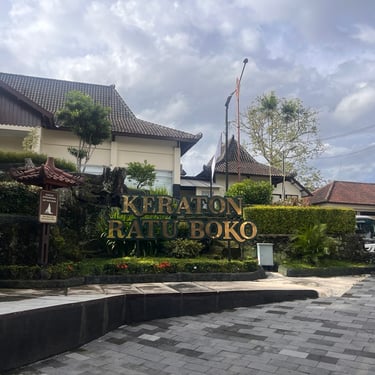
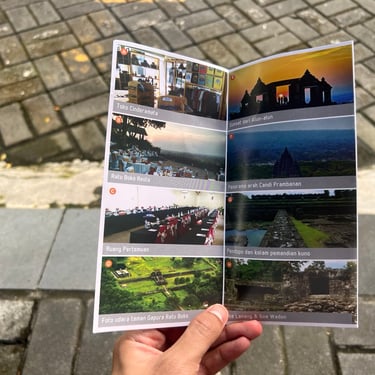
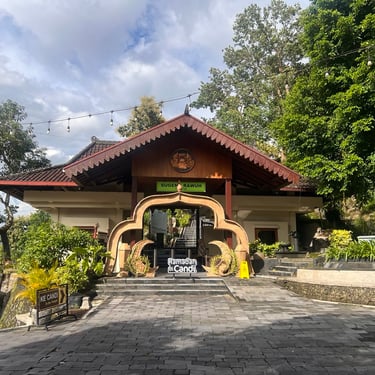
After that, we rushed to Ratu Boko Palace to end our temple journey. Unfortunately, we couldn’t explore the internal architecture much due to time constraints. Instead, we quickly read the brochure and enjoyed the outdoor scenery. From the bird eye view, the site revealed a symmetrical layout with bathing structures and open terraces. Unlike a typical temple, it is believed to have been a royal palace or fortified complex from the 8th century, linked to the Mataram Kingdom. The grand gates, stone walls, and wide open platforms create a powerful sense of space, especially at sunset when the light enhances its dramatic atmosphere. Honestly, most of this information came from the brochure and not my own observation hahaha… sedihhh. After that, it was time for us to return to the hotel and break the fast.
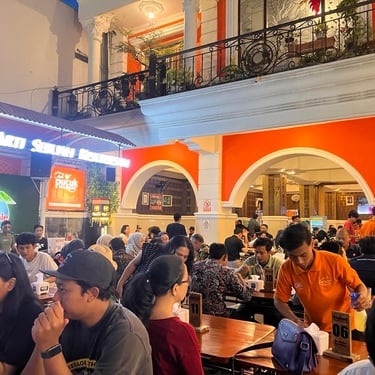
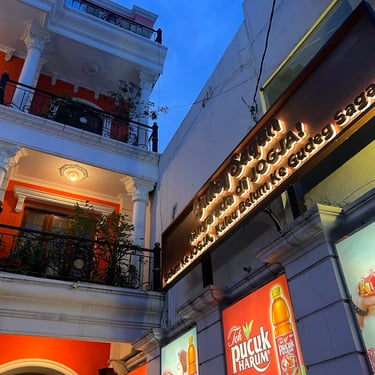
We broke the fast at a famous restaurant recommended by our Grab driver, Gudeg Sagan, which was only about a 5-minute walk from our hotel. The place was quite busy, with many customers, both Muslim and non-Muslim enjoying their meals. They are especially known for serving the famous dish Gudeg. Gudeg is a traditional dish from Yogyakarta made mainly from young jackfruit (nangka). It has a sweet, savoury, and slightly rich flavour, and is usually served with rice, chicken, boiled egg, tofu, and crispy beef skin (krecek). Ricky said the food was very delicious, but for me it was just moderate.
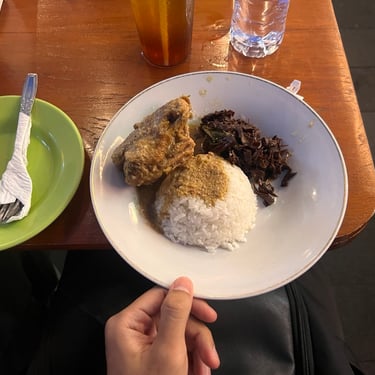
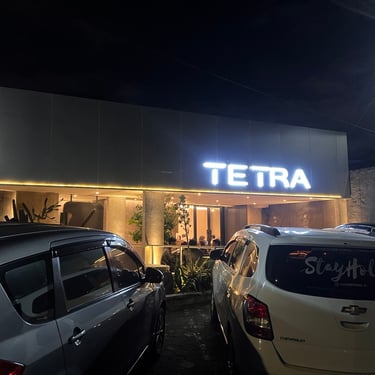
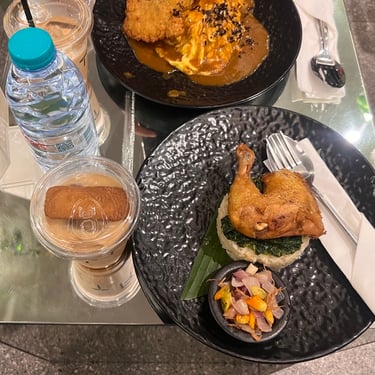
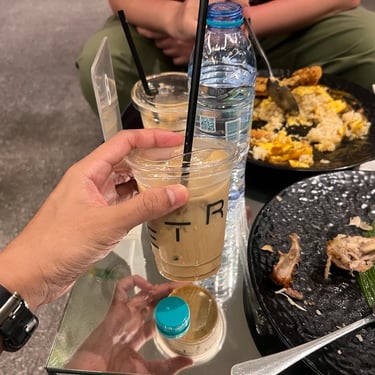
We rested for an hour at the hotel to pray and allow the food to fully digest. Then we went to a nearby cafe, Tetra, just located behind the hotel. The cafe was full of Gen Z, probably local students from nearby universities. They brought laptops and sat in groups, so I assumed they were working on group assignments so fingers crossed to them. I ordered a set of rice with fried chicken, I didn’t know its name, but it tasted delicious. We had a quick chat and then headed straight back to the hotel to rest and sleep early after a long and tiring day.
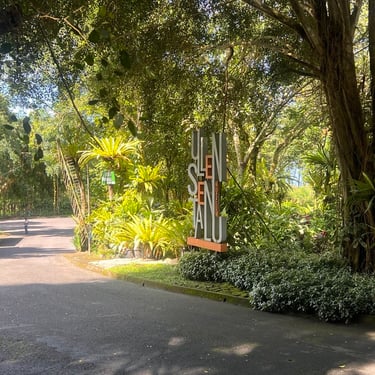
At Day 4, again we been to the outskirt of Jogja that took two hours of destination to Ullen Sentalu Museum in Sleman Regency. This cultural museum was located in the cool highlands of Kaliurang, near Mount Merapi in Central Java, Indonesia. The museum is dedicated to preserving the history, art, and culture of Javanese aristocracy, especially from the Yogyakarta and Surakarta royal courts.
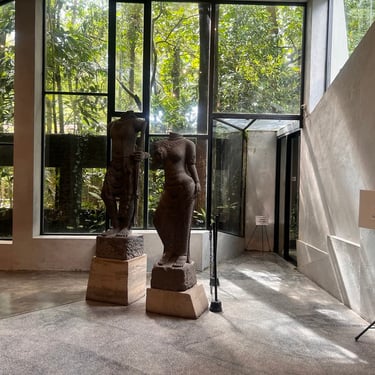
Unlike a typical museum, Ullen Sentalu offers a guided and immersive experience. Visitors move through dimly lit, atmospheric spaces filled with paintings, batik collections, royal letters, photographs, and sculptures. The storytelling approach focuses heavily on the lives of Javanese princesses, poetry, and court traditions. Since we had visited several museums near Malioboro Street, it was easy for us to comprehend the explanation delivered by a female staff. She was so good and well versed in delivering the information despite we were having a slightly different language and dialects. The exhibitions were organised from a room to another room, we needed to move along the narrow paths, and taking photos are prohibited in some spaces.
Of all, a story that captured my attention was about Gusti Raden Ayu Siti Nurul (Gusti Nurul), a Javanese princess from the Mangkunegaran royal family in Central Java, known for her beauty, demureness, mindfulness, and skill in classical Javanese dance. She once performed a cultural dance at the Netherland with the delegations. She lived during the Dutch colonial period. She is also often mentioned in stories for having been admired by Sukarno, whose proposal she reportedly declined. Later in life, she chose to marry outside royalty and lived a long life, continuing to be remembered as a symbol of Javanese elegance.
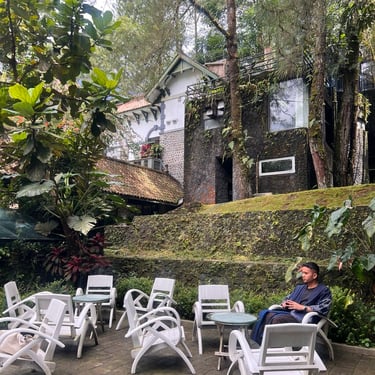
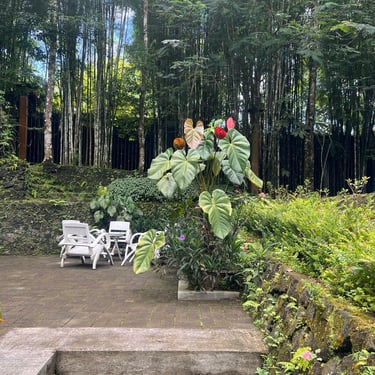
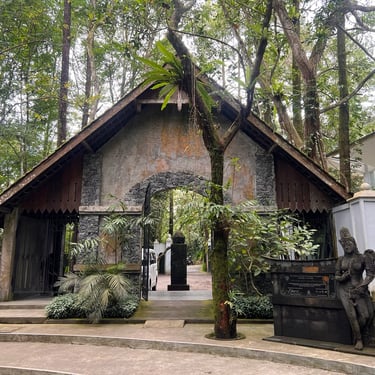
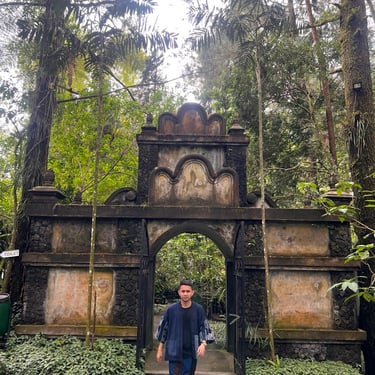
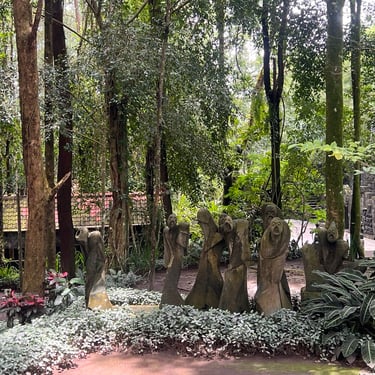
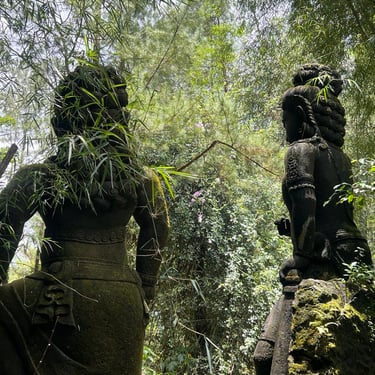
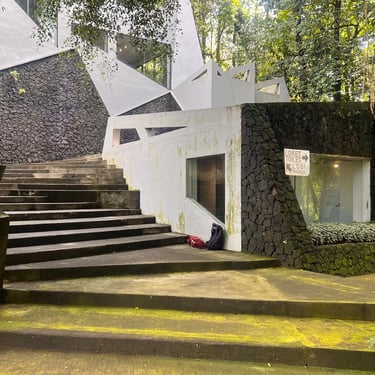
Apart from exhibitions, the museum also remarkable in architecture that blends naturally with the surrounding forest and highland landscape. It combines traditional Javanese elements with modern (particularly at the main entrance) and rustic design, using stone pathways, exposed brick walls, sculptures, open courtyards, and dimly lit corridors to create a calm and mystical atmosphere. Rather than appearing like a formal museum building, the spaces feel intimate and immersive, allowing visitors to experience Javanese storytelling in a more poetic way. I felt as I was living in a home rather than visiting a typical museum.
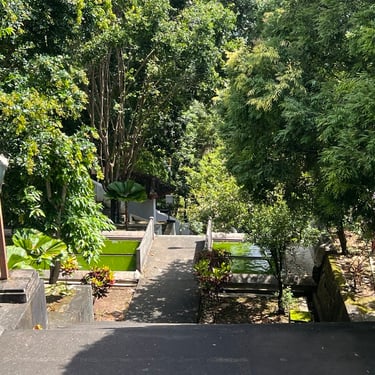
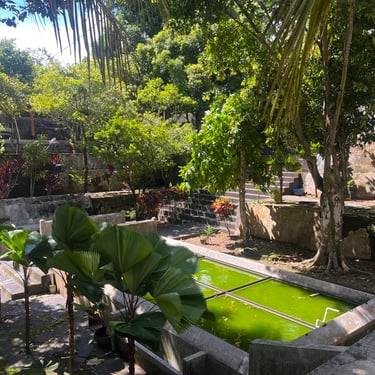
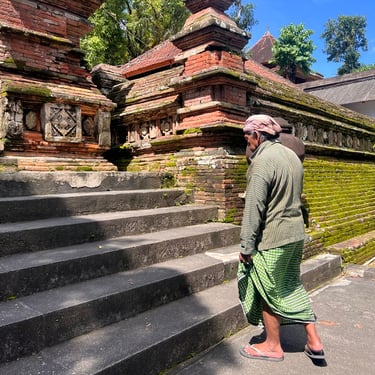
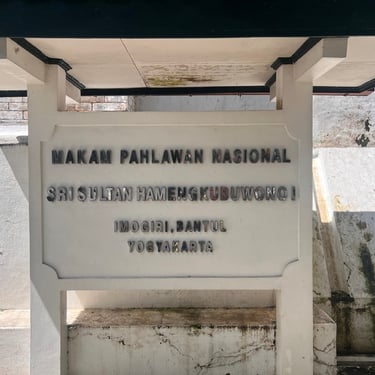
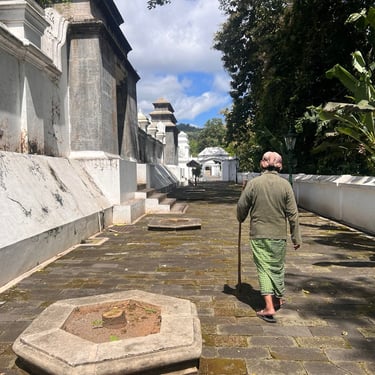
It was Friday, hot, yet rainy. We extended the heritage visit to Makam Raja-Raja Mataram Imogiri, the royal burial complex for sultans of Yogyakarta and Mataram. We had two entrance options, and we opted the second route, entering the upper side by a car. It had a black and white gateway, guided by a local old man, passed through several tombs, and steps by steps. The place was mainly constructed of concrete, Javanese bricks, and decorated with floral reliefs, palms, and a pond. We just briefly covered a tomb by tomb without questioning for a more detailed explanation and also refused to capture photos, as a sign to respect the sacred place. There was also a burial space prepared for the present sultan of Jogja. The ambience was so cool, calm, slightly sorrowful, and we could see surrounding grey forests.
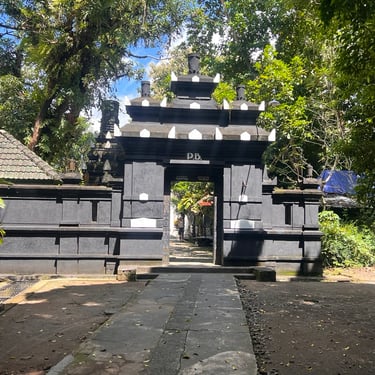
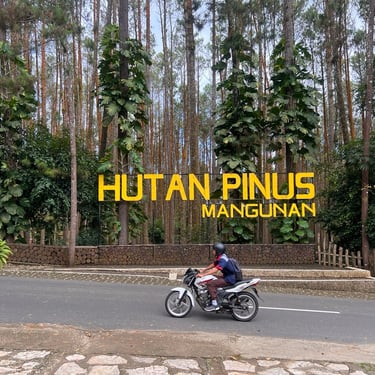
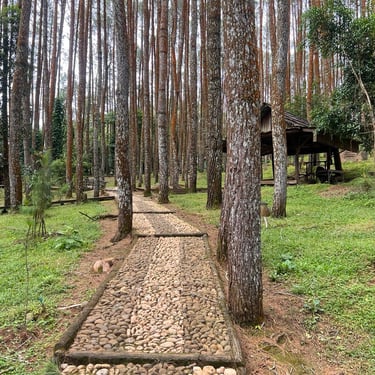
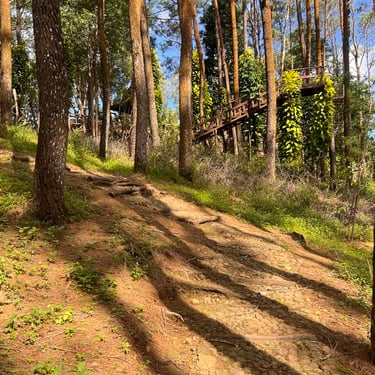
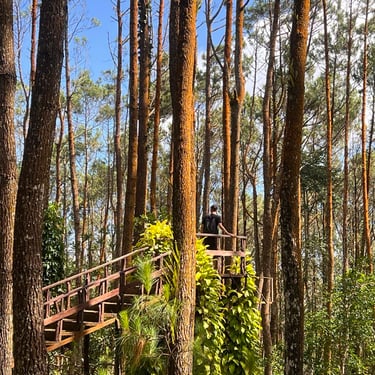
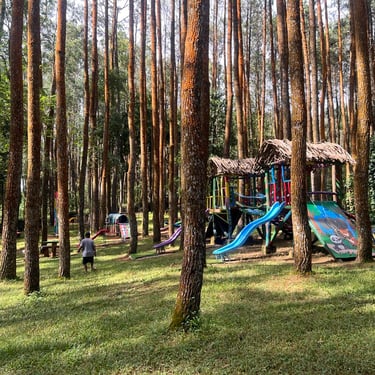
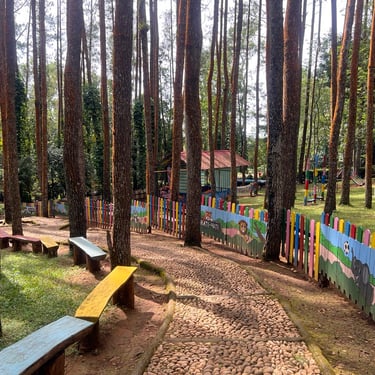
Not too far from the makam, we moved uphill towards Hutan Pinus Mangunan, a designed landscape filled with pine trees, an amphitheatre, viewing points, boardwalks, and a playground area. I loved the idea of appreciating the trees as the original elements with minimal intervention using boardwalks as the hardscape. We penetrated deeper through the trees along the multiple angles of the organic boardwalk. It created a sense of layering, excitement, adventure, and intimacy.
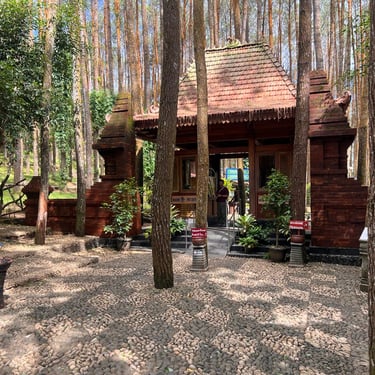
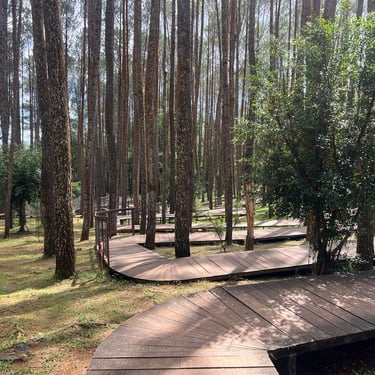
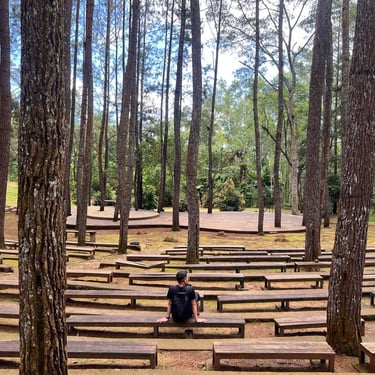
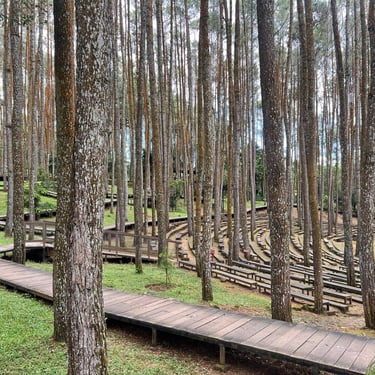
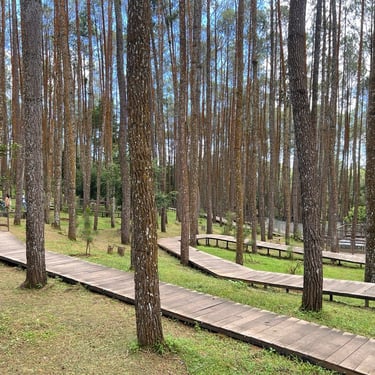
As we went higher, we enjoyed the surrounding natural views from an elevated platform. I was captivated by the spontaneous design of the paths, which were entirely made of natural elements. The design was not too formal and really blended with the surrounding landscape. There was also a designated area for children to play. The site became even more stunning with the crossing shadows created by the trees. I wish to see this kind of design in my country.
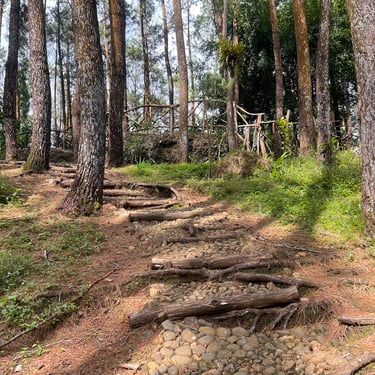
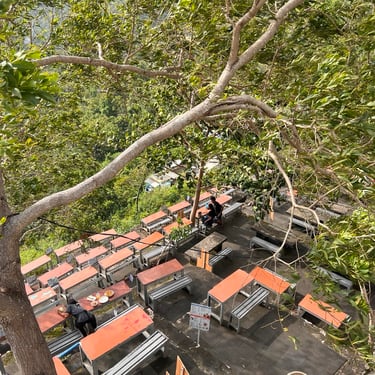
The next checkpoint was Paralayang Watugupit, a highland area famous for its nature views, surrounded by the sea, chalets, and villages. The main attraction here is dining at restaurants, drinking coconut water while enjoying the countryside view. We went to a restaurant located on a steep slope, which offered a picturesque view of the beach and refreshing mountain air. We could not eat as we were fasting, so we only spent around 20 minutes there.
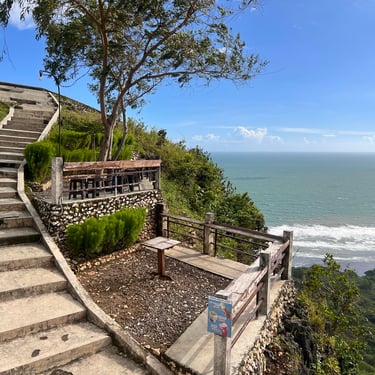
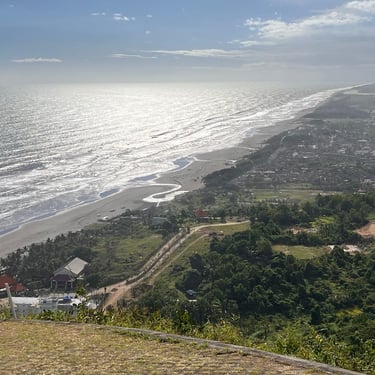
We planned to return to the hotel, but suddenly the driver offered to take us to a nearby beach, called Parangtritis Beach.
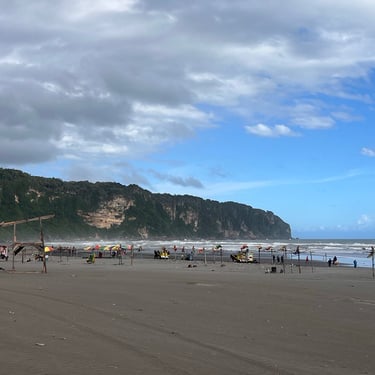
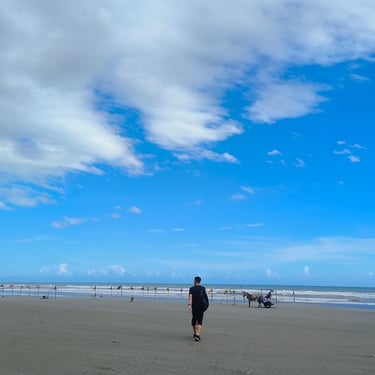
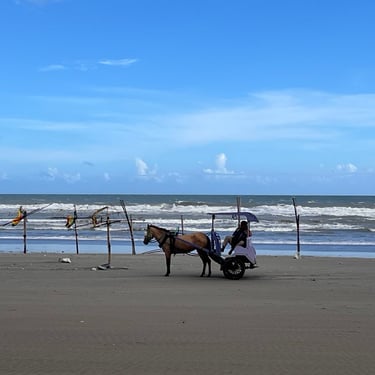
I expected just a short walk, but an elderly man offered me a horse ride. Since the price was affordable, I out of the blue agreed to ride a horse for the first time. I was both excited and nervous, haha. The horse was quite tall but very gentle. At first, I rode slowly along the beach with great caution. I felt a bit afraid when the horse suddenly stopped to drink water, as I became anxious seeing its head lowering down, but I handled everything calmly and safely.
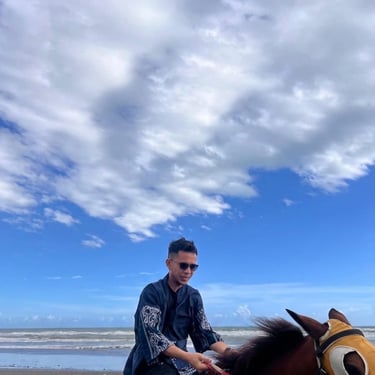
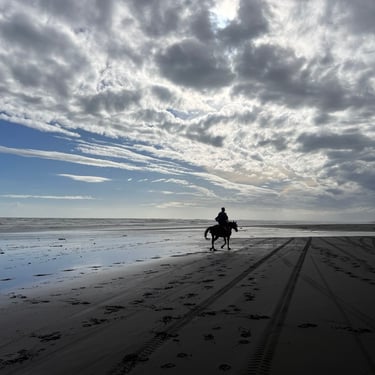
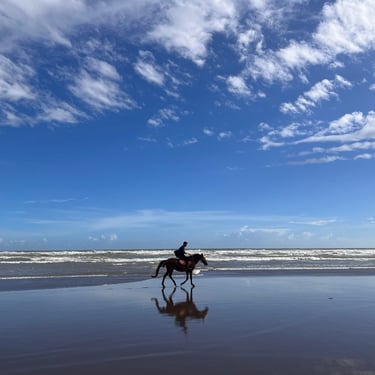
Five minutes later, I gained more confidence and spent the rest of the ride fully enjoying the experience, surrounded by views of the beach, sea, and hills. It was an unforgettable moment, my first time riding a horse, and I felt completely over the moon. After that, we were hungry, thirsty, and tired, so we rested at the hotel for a while before going out again for iftar.
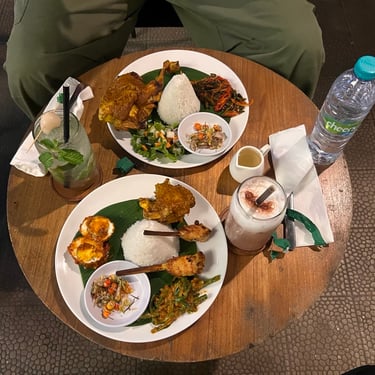
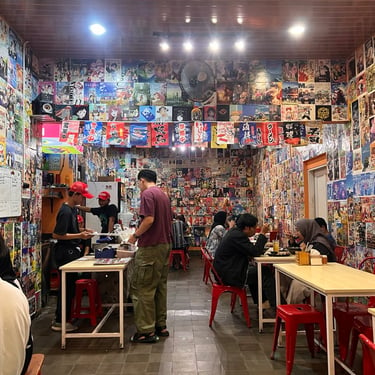
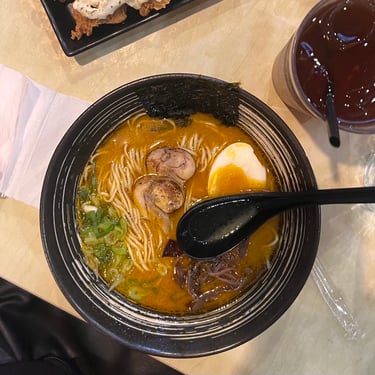
We broke our fast at a restaurant near Gadjah Mada University. I ordered Balinese cuisine, ayam panggang, and it was spicy. We did not stop eating there, an hour later, we went to a restaurant that served instant ramen noodles, located near Stasiun Lempunyangan. It was very yummy, but a bit salty, and the prices were extremely cheap. We then went to Indomaret as usual to buy something for sahur.
The whole night I spent scrolling through videos of horse riding in Uzbekistan, Morocco, and African countries. This was the aftermath of riding a horse during the evening. That day was so memorable, as I gained a new experience that gave me a peaceful sleep.
© 2026. sentuhanzulkarnaen. All rights reserved.