Singapore was Small but Impressive
4 Days 3 Nights in Singapore - Nature-based Solutions (NbS)
Muhammad Zulkarnaen Bin Mohd Zaine
6/29/20254 min read
Singapore was clean, modern, lavish, high-paced, and individualistic. The moment we passed through the Woodlands Checkpoint, the greenery and neatly arranged highways immediately captured our attention. It was a great opportunity to pass through the EcoLink at Bukit Timah Expressway, a well-known animal bridge in Asia.
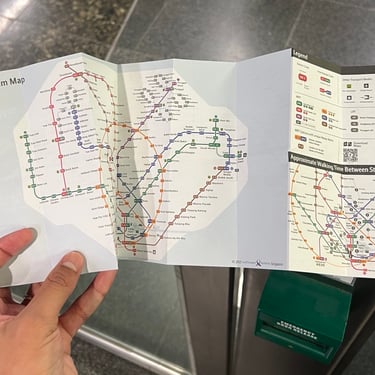
We checked into a hotel in Jalan Besar. In context, we were close to MRT Jalan Besar Station, Little India, Perak Road, Dickson Road, and Upper Weld Road. The area was vibrant, with strong Chinese and Indian communities. The first night in Singapore was effortless and explorative. I was excited to try the train system with its many connections. I went to the nearest station, collected a map for guidance, and bought a tourist pass for SGD30. The card was optional but very helpful.
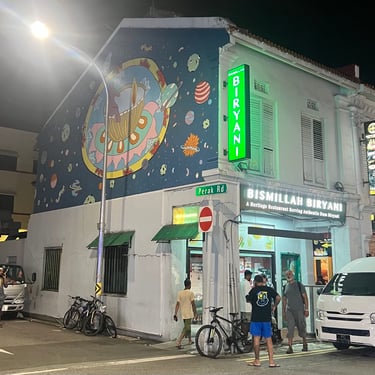
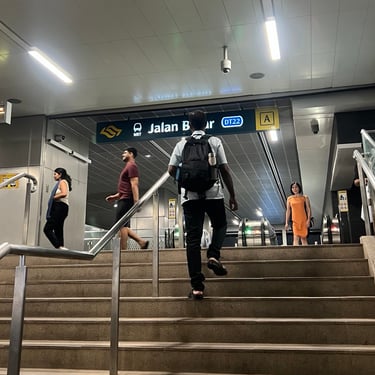
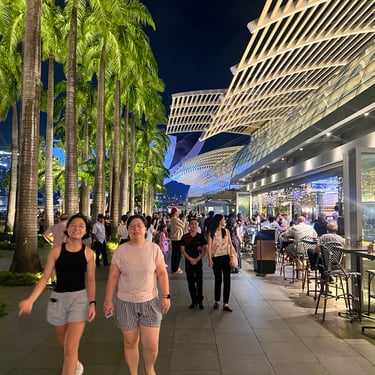
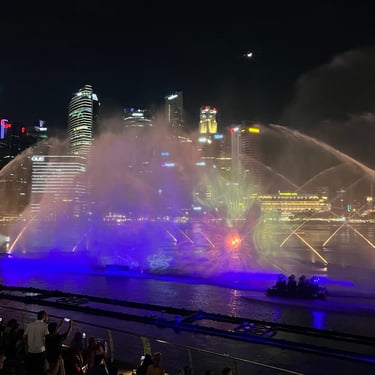
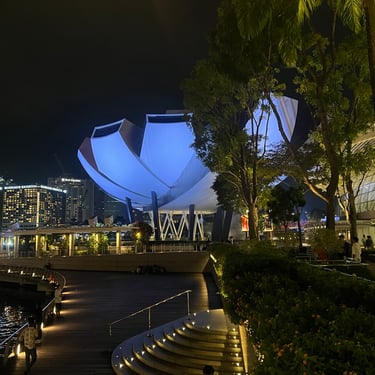
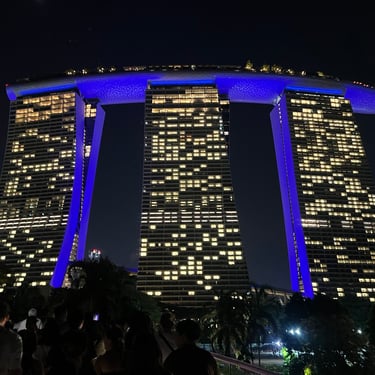
I headed south to visit Marina Bay Sands. I watched the free nightly outdoor light and water show, featuring orchestral soundtracks, striking lighting effects, and fountains, accentuated by Malay, Chinese, and Indian cultural songs. With skyscrapers as the backdrop, the show was wonderful and crowded with tourists. Outside the mall, I saw groups of students practising energetic dances, confidently performing while being encircled by public. The night was enlivened by tourists visiting bars, malls, and enjoying the city view. Later, we stopped at a mamak restaurant for soft drinks before heading to bed. The first night in Singapore felt welcoming and enthralling.
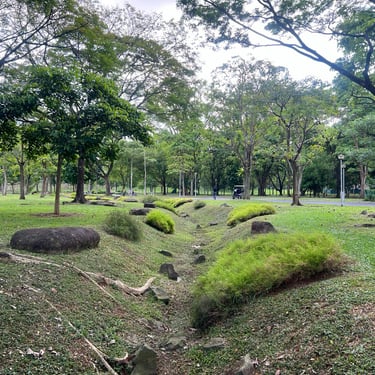
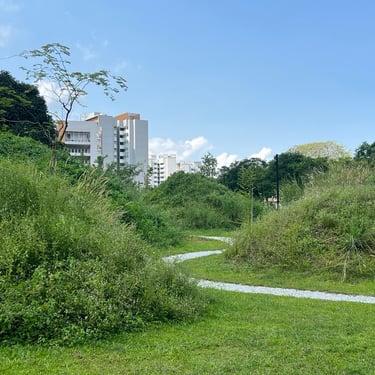
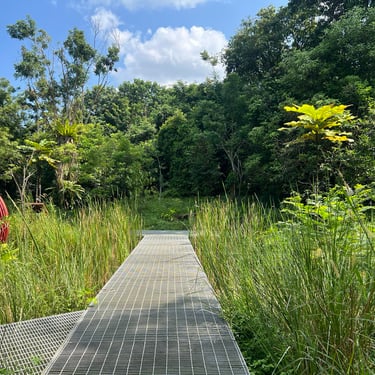
The next morning, we toured Jurong Lake Gardens. The purpose of the visit was to explore how Nature-based Solutions were applied in Singaporean landscape design. The garden was free-entry, expansive, and accessible from many entrances. It was designed around nature, play, and community, with key themes including the Chinese Garden, Japanese Garden, and Lakeside Garden. My favourite spaces were the swamp forest, grassland, Rasau Walk, Sunken Garden, and Water Lily Garden, with the grassland being the best of all. The grassland design felt naturalistic, effortless, wise, and out of the ordinary, and full of pleasant surprises. The mounding landforms and tall Lalang created moments of discovery, sometimes reminding me of Teletubbies haha. Man-made structures were minimal, and the landscape was fully green. Even hide-and-seek would be fun there for smaller and shorter visitors. I strongly encourage others to study its design. I was also impressed by the organic form of the Rasau Walk, as forming such curves is not easy. Beside it were wetlands resembling a long river, with sago palms and shrubs. After more than two hours, we left for chicken rice.
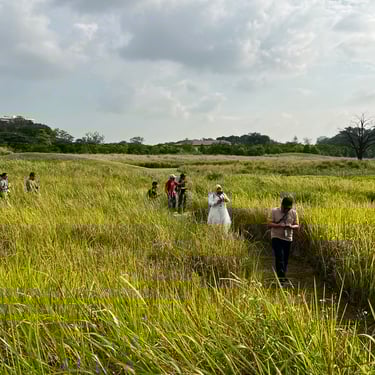
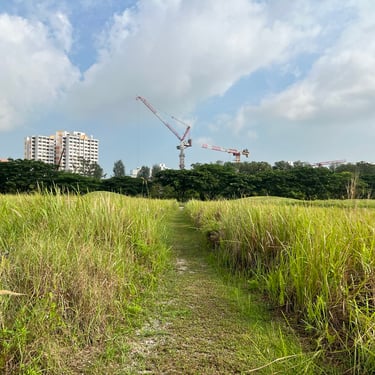
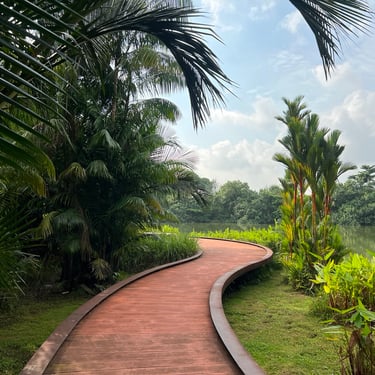
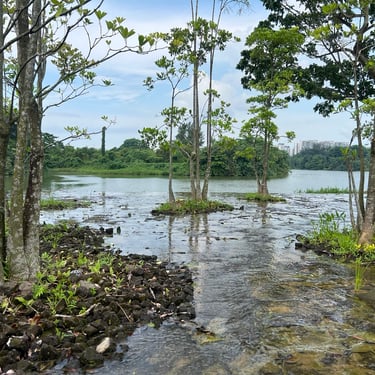
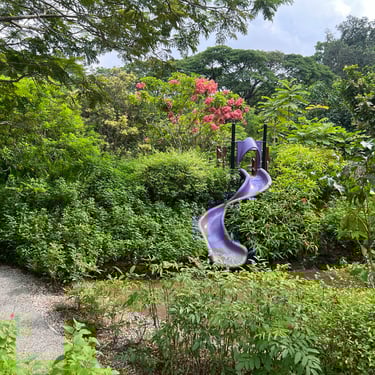
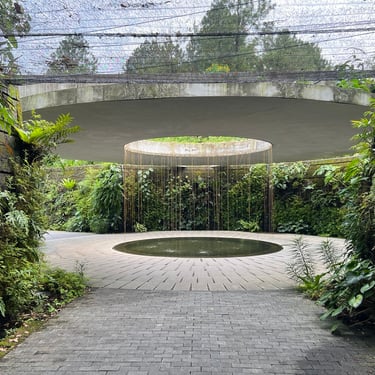
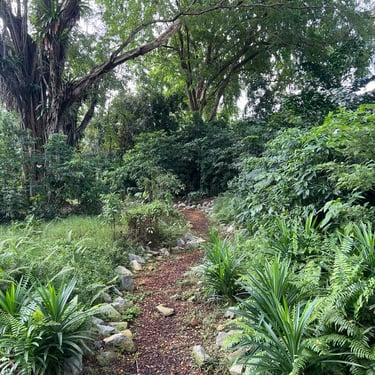
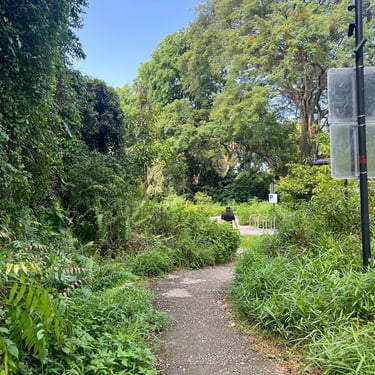
In the afternoon, we visited Rifle Range Nature Park, a former quarry wetland in Bukit Timah. A Singaporean landscape architect guided us with insightful explanations. We walked from the main entrance to Colugo Deck and back. Circulation was facilitated by timber walkways and natural ground surfaces, enhancing the sense of immersion in nature. From Colugo Deck, one of the highest points, we enjoyed panoramic views. The highlight for me was the unique trail design, combining different materials and organic forms to create varied sensory and walking experiences.
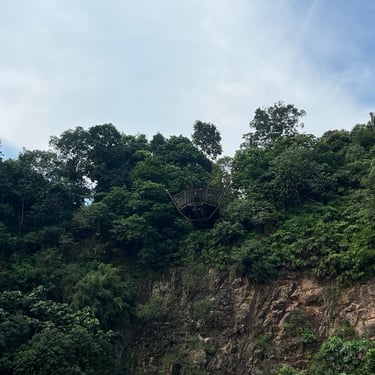
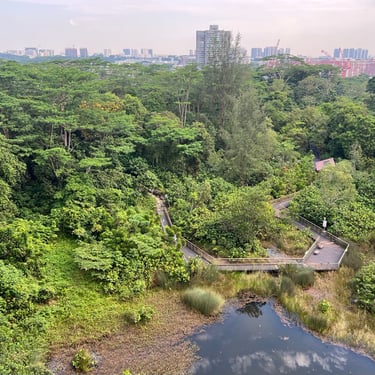
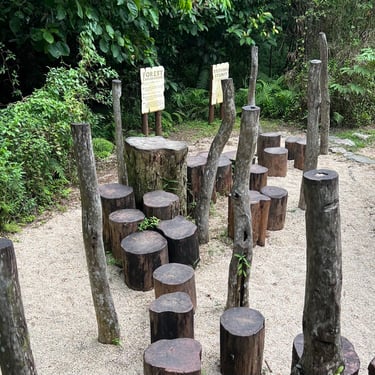
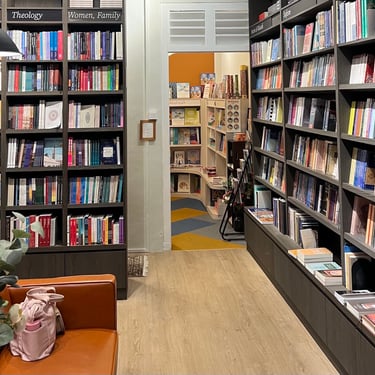
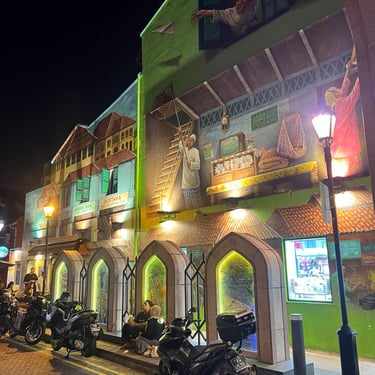
That evening, I explored Arab Street and Kampung Glam. I dined at Zam Zam Restaurant, prayed at Masjid Sultan, and bought a book at Wardah Books. The meal and coffee were pleasant, and the ambience was calm. I was told that the azan can only be heard from Masjid Sultan, not broadcasted widely from other mosques. As I walked further, I admired mural paintings, bought a cap and apples, and passed by construction sites. I even thought of trying a rental bike but did not know how to use it haha.
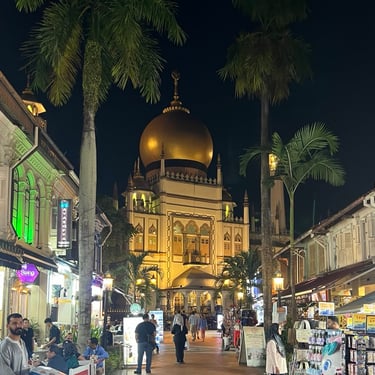
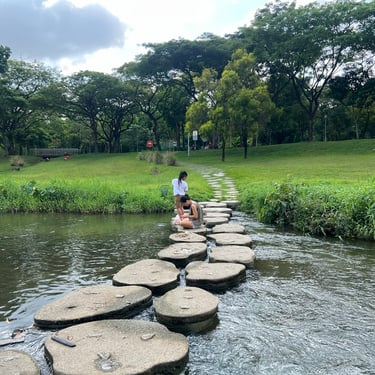
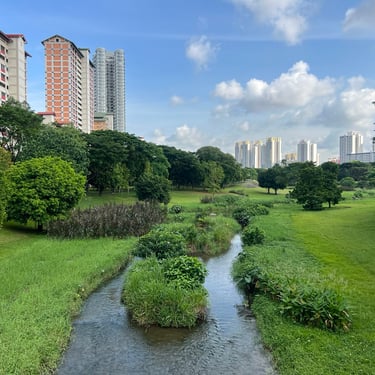
On the second day, we visited Bishan-Ang Mo Kio Park, one of the most-referenced urban parks during my bachelor’s study. It was once a concrete water canal but has been naturalised into a river to enhance biodiversity and provide recreational space. Residents nearby are fortunate to access such a healthy green space within walking distance. The park includes areas for butterflies, dogs, amphitheatre events, bioswales, playgrounds, river activities, bridges, and even a McDonald’s. The highlight was interacting with the river, placing our feet in the water, watching fishes and tortoises, and stepping across stones. During heavy rain, water levels may rise, so sirens and life-buoys are provided for safety.
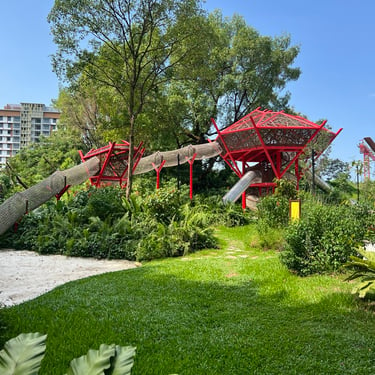
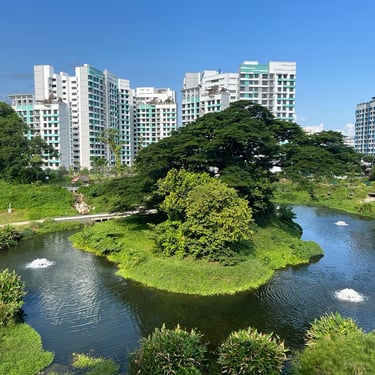
After lunch in Kampung Glam, we continued to Bidadari Park, developed on a former cemetery site. Surrounded by apartments and a mall, the park features adventurous playgrounds, spontaneous paths, and impressive plant compositions. Although it appears small from the entrance, deeper exploration reveals multiple perspectives and attractions, including a man-made island dominated by a large tree. The island’s simple organic form is enhanced by thoughtful softscape arrangement.
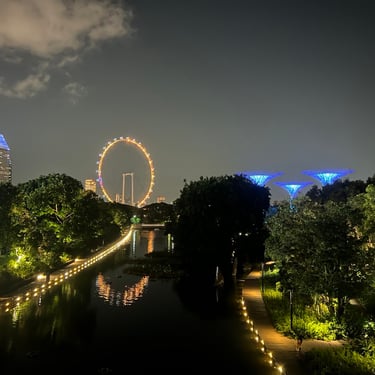
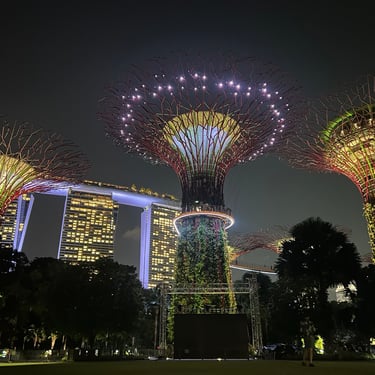
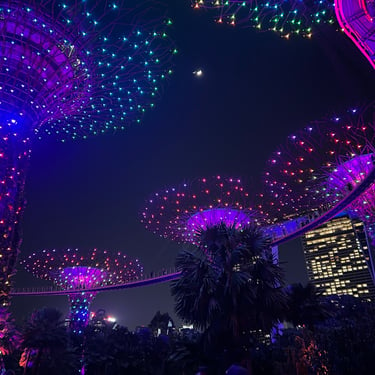
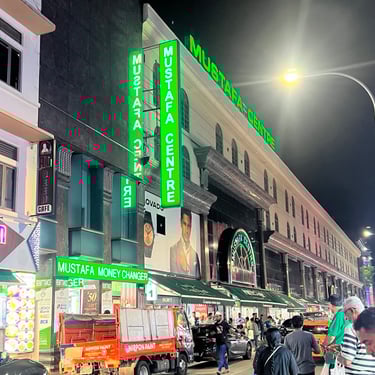
That night, I visited Marina Bay Sands SkyPark and enjoyed the Garden Rhapsody light show with the crowd from different countries. Lying on the ground, I fully immersed myself in the performance. Later, I wandered to Mustafa Centre in Little India. The mall was lively with Indian communities and visitors seeking perfumes, chocolates, clothes, and souvenirs. I did not buy anything, only enjoyed fried rice and kopi O panas at a mamak restaurant before walking back, exhausted from the long day.
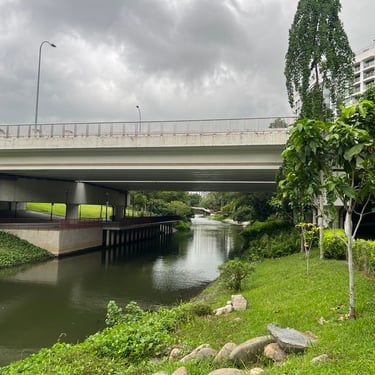
On the final day, we visited Punggol Waterway Park, featuring bridges, bike rentals, lush greenery, and open recreational spaces suitable for jogging, brisk walking, and cycling. The circulation was straightforward, and we walked freely, though everyone seemed slightly low on energy haha.
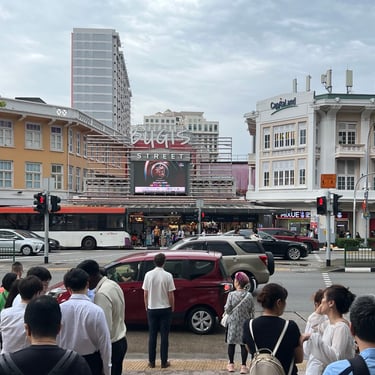
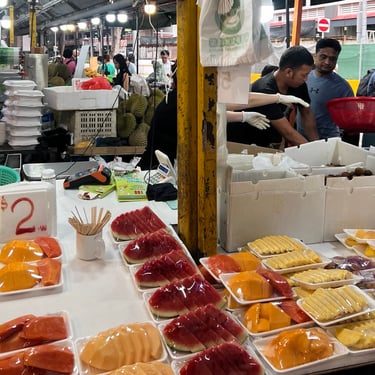
We had lunch at Bugis Street, known for affordable clothes, souvenirs, fruits, and chocolates, somewhat similar to Kenanga Wholesale City in Kuala Lumpur.
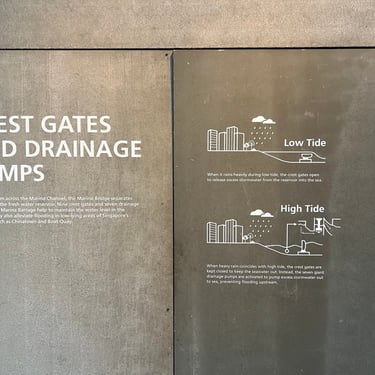
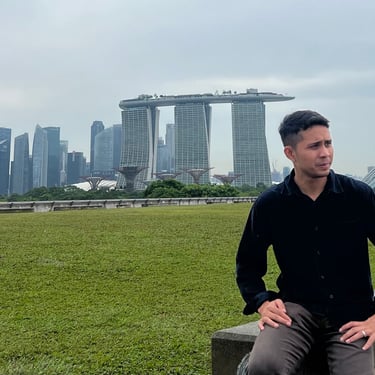
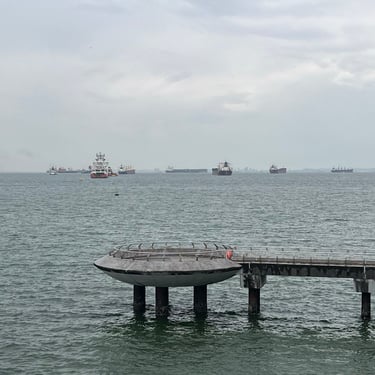
Next, we visited Marina Barrage, which is designed for flood control, water supply, and recreational purposes. During the visit, a model presentation explained how the dam regulates water levels and separates seawater from the freshwater reservoir. The green rooftop offered stunning views of the skyline, including highways, residential buildings, Marina Bay Sands, and the open sea. We were also fortunate to see fighter jets flying overhead. The design clearly demonstrates that landscape architecture engages not only with plants and greenery, but also with water infrastructure and environmental engineering systems.
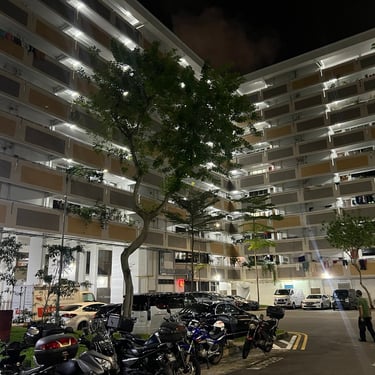
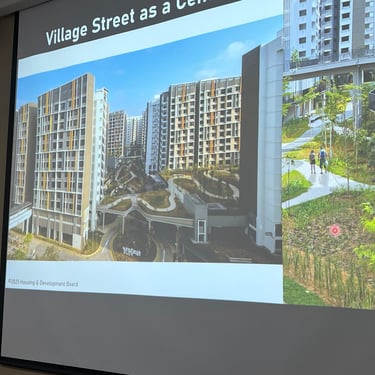
Our final visit was to the Housing and Development Board (HDB) Hub at Toa Payoh. We learned about Singapore’s public housing management, design submission processes, and exchanged ideas on park development and maintenance between Malaysia and Singapore. They shared slides and we asked questions. The session lasted about an hour and ended with photo-taking and gift exchanges.
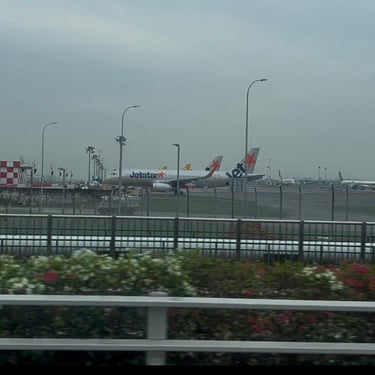
Around 4pm, the tour concluded, and we headed to Changi Airport and Woodlands Checkpoint. We crossed at night, feeling tired but grateful for the experience.
Overall, from my observations, Singapore’s application of Nature-based Solutions (NbS) reflects wise design thinking. NbS uses natural elements to solve design problems and meet public needs. With a sense of austerity, designers reuse existing materials such as logs for seating or stepping stones and recycled concrete slabs for pathways. This reduces waste, saves cost, and respects the original character of the site. NbS also allow nature to grow in a less rigid way, yet within careful management to ensure safety and function. This balance makes the landscape feel alive but organised. Most importantly, NbS work efficiently when parks are clean and well-maintained. This demands a high level of discipline and manners from the park users to keep the places safe and clean.
© 2026. sentuhanzulkarnaen. All rights reserved.