Nyamannya Lenggong
Lenggong is one of the towns in Malaysia where you can find calmness and pleasure.
Muhammad Zulkarnaen Bin Mohd Zaine
12/9/20245 min read
Nyamannya Lenggong represents a city in Perak, namely Lenggong, which is calm and peaceful. Everything in the town seemed untouched by influences that could disturb the layers of hills, trees, animals, architecture, and even the villagers. Most of the population in Lenggong is primarily Malay. The main economic activities are fishing, farming, government sectors, and village-related work. Lenggong has many hills, vast open fields, lakes, and rivers. It took more than two hours to travel from Serdang to here.
The story began when my lecturer invited me to join postgraduate students in exploring and inventorying Lenggong as a cultural site for their landscape studies. Since I had just finished my language examination, I warmly welcomed the invitation and hoped it would be a perfect retreat for me. With a group of students, staff, and lecturers, we departed by bus and arrived in Lenggong early in the morning, around 9am.
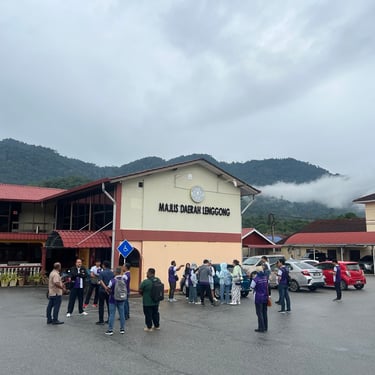
We spent the first hour in town visiting Majlis Daerah Lenggong. We were given a brief introduction about the history and demography of Lenggong. The meeting went well, and I was informed that the villagers prefer eating fish rather than chicken, just like me, haha.
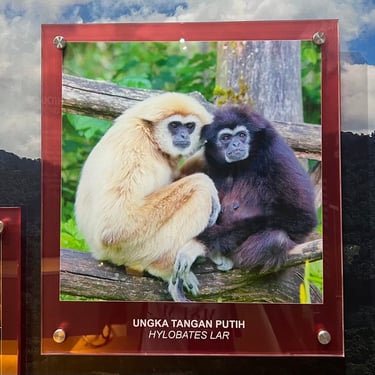
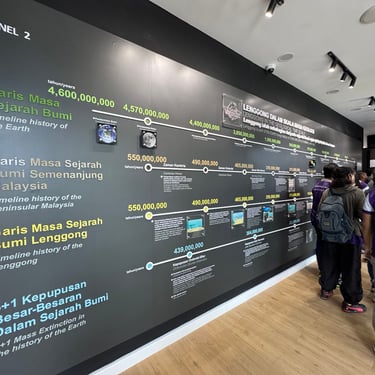
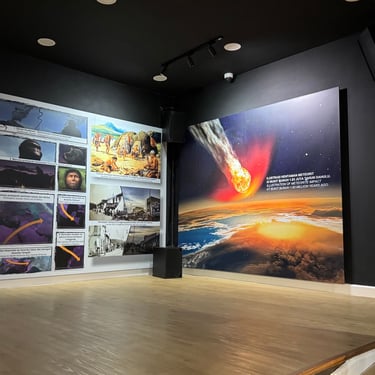
We continued our journey to Lenggong Geopark Gallery, located approximately 5km from the Majlis Daerah. The gallery exhibited flora and fauna species, types of rocks and stones, and the geological timeline of Lenggong’s formation. I was surprised to learn that Lenggong was formed thousands of years ago.
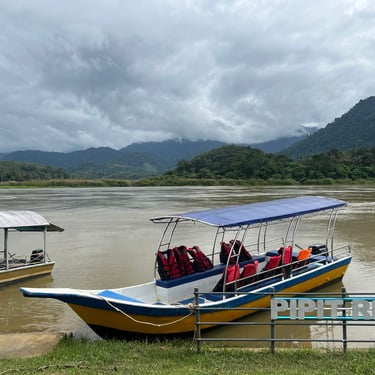
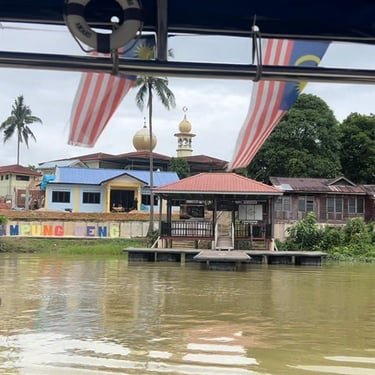
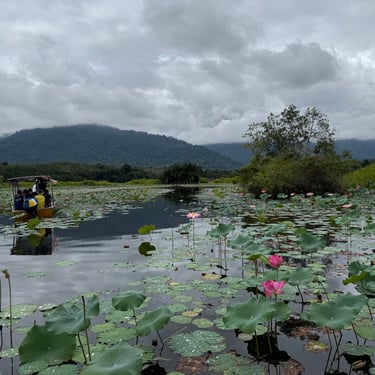
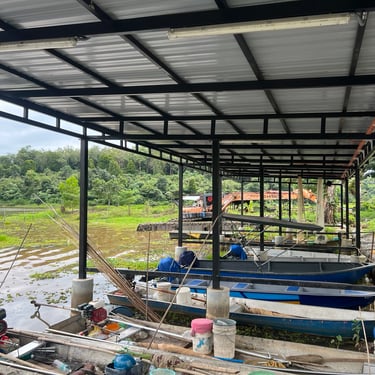
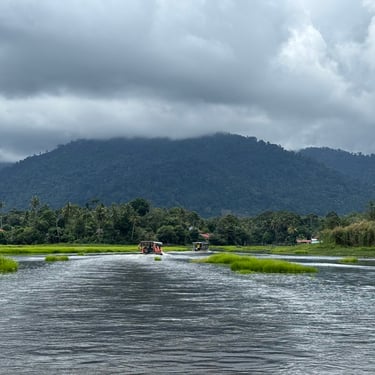
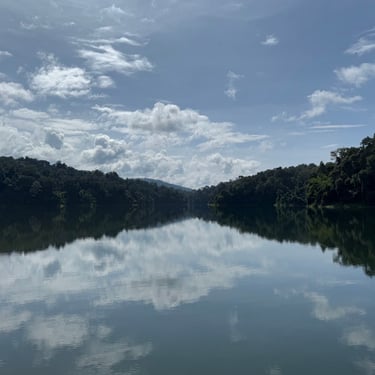
Next, we went to Sungai Pipit, Kampung Padang Luas. We took a boat to explore the countryside, surrounded by vast lakes, hills, and villages such as Kampung Beng and Tasik Raban, which is considered a mini Amazon. Some of us were very excited to see an area full of bunga Teratai. At first, I did not feel excited because I did not know the place yet, but the journey was truly chef’s kiss. We were divided into three boats and followed one another. Along the way, we saw a borderless lake, a mosque, magnificent Malay houses, a school, a bridge, tranquil nature, mangroves, and plants used for making tikar mengkuang.

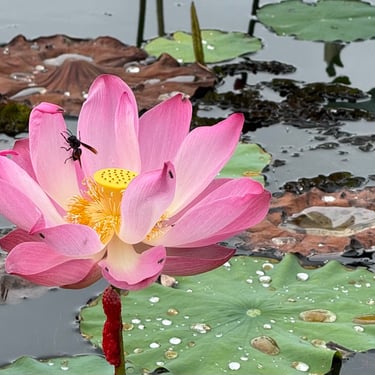
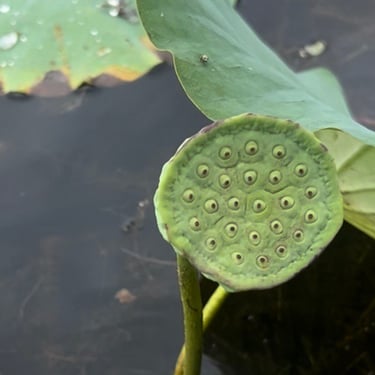
We stopped at the most attractive spot, a corner of the lake filled with Teratai. We were busy capturing photos. Some touched the flowers, and some tasted the biji. I tried it, and it was very bitter hahahaha, but it was worth trying. The boatmen told us that beneath the lake surface was once an open paddy field. That means the Teratai roots go deep into the ground, and we were basically floating above a former paddy field. The lake is man-made, not natural.
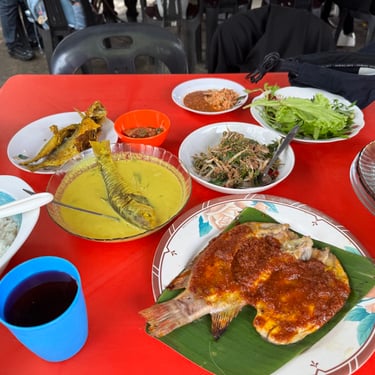
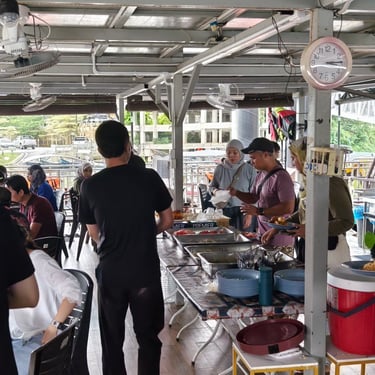
We were very hungry and decided to take a break at a restaurant located along a narrow path between houses. We walked past several houses before reaching it. Yes, we ate fish, and some of us bought pekasam. The food was delicious. I was full and happy.
I thought we were heading to a camping site to end the day, but we had a to move to another place, Telaga Biru, Kampung Chepor. The water source of the telaga comes directly from underground and is believed to be healthy for drinking. A myth says that whoever drinks the water will look young. Unfortunately, due to the rainy season, we could not try it. I was quite sad hahaha.
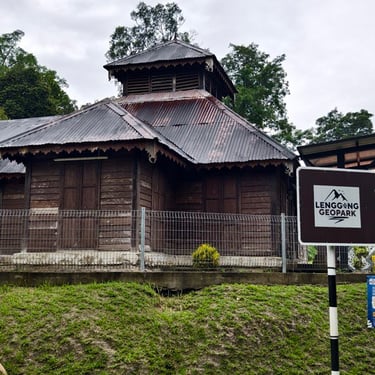
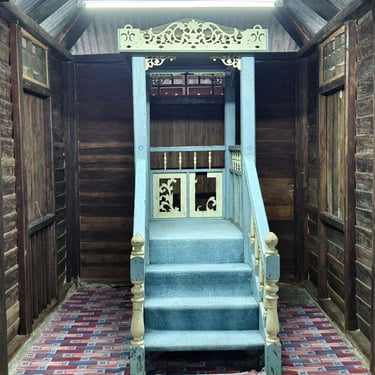
We bought rempeyek and kerepek from a nearby shop. The shop even had a few deer that we could approach closely. We also stopped at a Malay mosque, Masjid Raja Kampung Chepor, to quickly observe the details of the indoor decorations. The mosque has a mimbar made of timber, and it is still functioning.

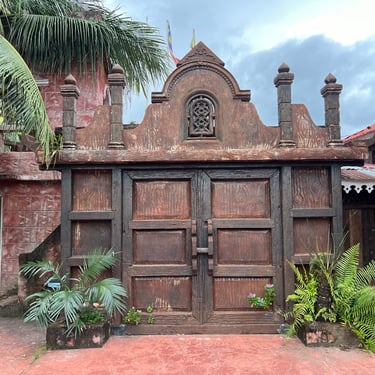
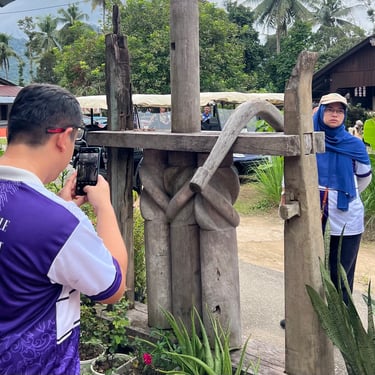
We went to Aki’s ‘museum’ by buggies because the road was narrow. I was impressed by Aki’s effort to preserve Malay heritage, including traditional daily equipment, keris, classic furniture, an old barber shop setting, mysterious stones, traditional sugar cane processing tools, a small segment of paddy field, and a huge wooden archway. His enthusiasm for learning and sharing knowledge about Malay culture deserves recognition and support from the state.
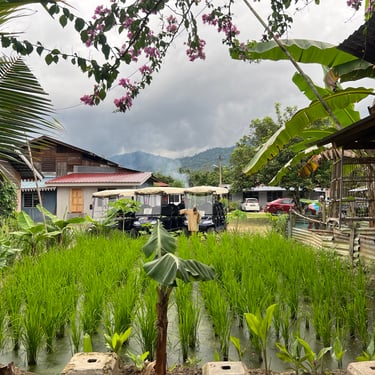
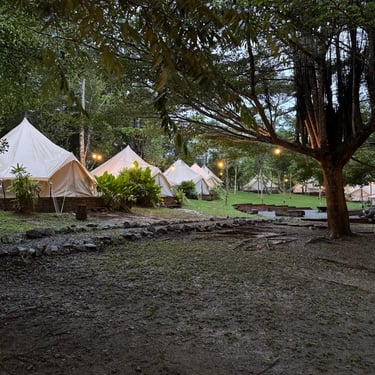
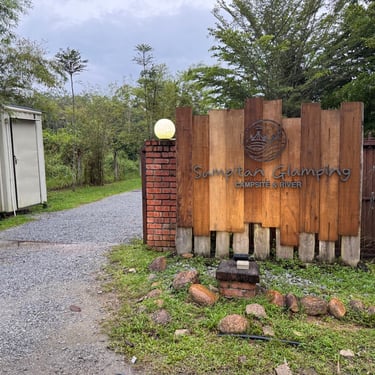
In the late evening, we checked in at Sumpitan Glamping. The place had a river flowing beside it, rooms of different sizes, a kitchen, and a small hall. I was tired, but the sound of singing birds, the movement of trees, and the nonstop flow of the river relieved my emotions. Drinking hot coffee and chatting with friends were lovely and memorable moments.
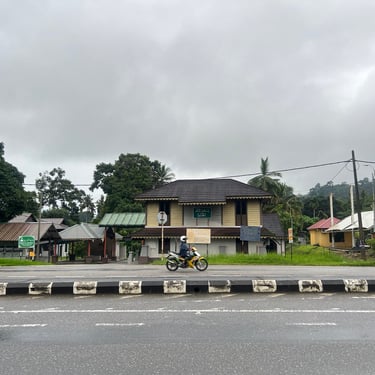
At 7am, we packed our belongings and left for breakfast near Masjid Lama Lenggong. I ate roti canai and kopi O panas, while some preferred nasi lemak. The breakfast was heavy because we needed energy for the next activity, which was hiking.
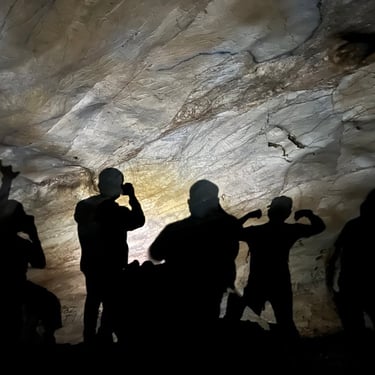
The hiking began with a briefing about Gua Teluk Kelawar, one of the caves in Perak famous for archaeological studies. The ground was wet, and of course, we could not come out clean haha. The cave is gazetted as Warisan Kebangsaan, so it must remain authentic and protected from new development. It is believed that past communities once inhabited this cave. Archaeologists found metals, human bones, and ancient tools.
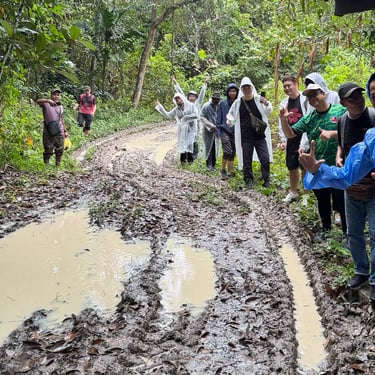
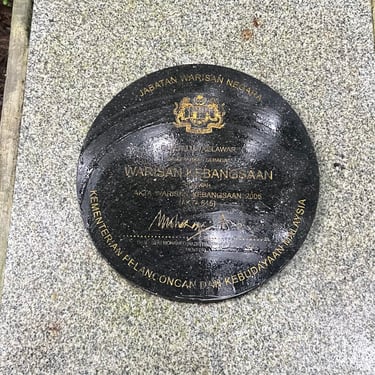
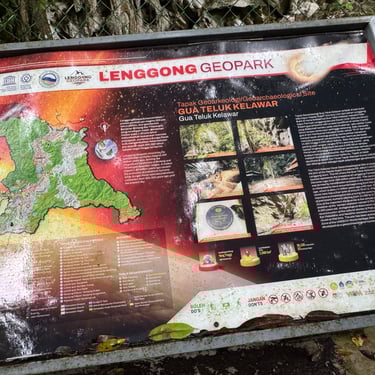
As we moved from one level to another, we were constantly surprised not only by the challenging trails but also by the cave formation that reflected past lifestyles. Inside the cave, there is actually a river flowing through the rocks. This means the communities carefully selected the cave not just for shelter and protection from wild animals, but also for access to water. This is how civilisation begins from resources to activities.
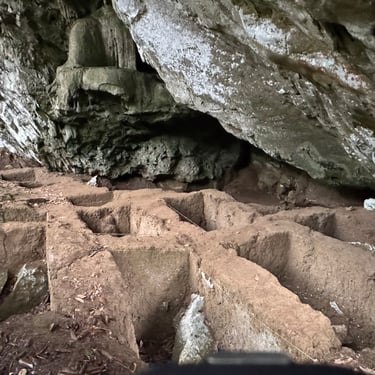
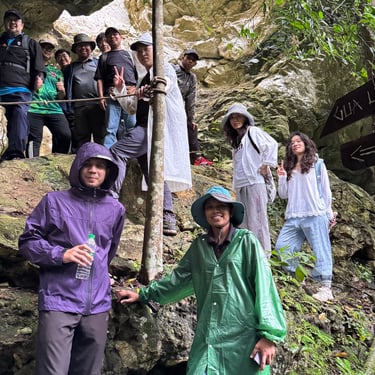

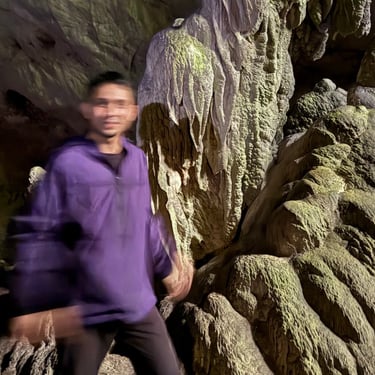
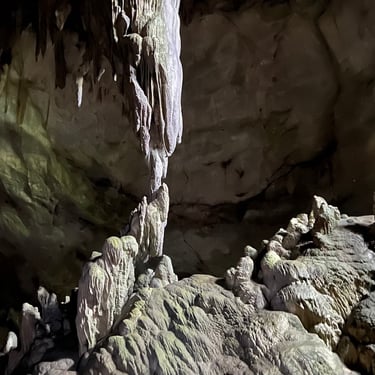
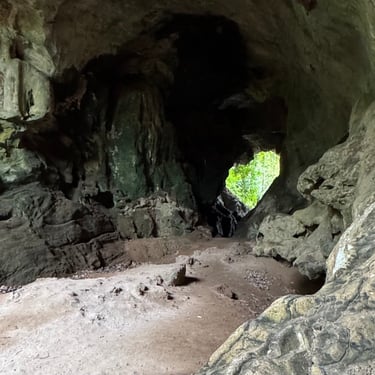
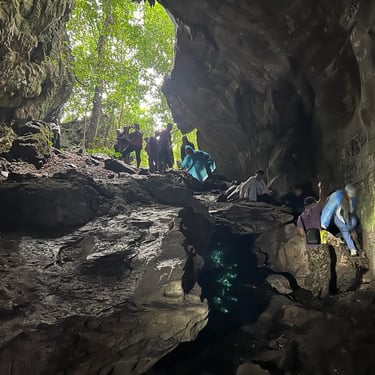
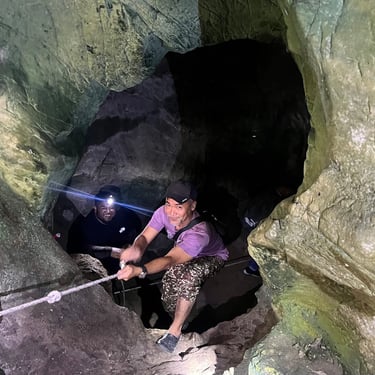
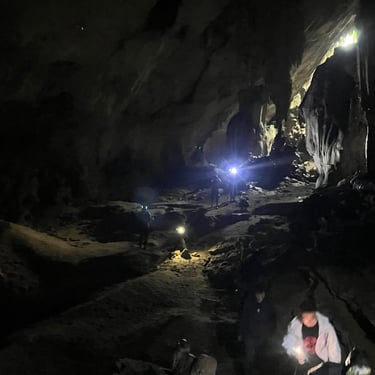
I snapped pictures because there were outstanding perspectives everywhere. The cave was very high, and we needed ropes to move safely. At certain spots, we had to squeeze through narrow openings. It was challenging, exciting, and satisfying. A group of five of us stopped at one dark section decorated with vandalised art, haha. One guy told me that the place is linked to Mawas, a figure in Malay legend. After about three hours, we returned to ground level. We bought snacks and ice cream from nearby shops before heading to our next destination.
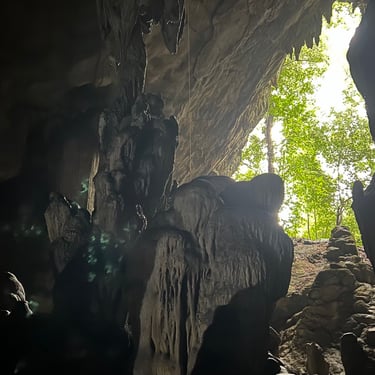
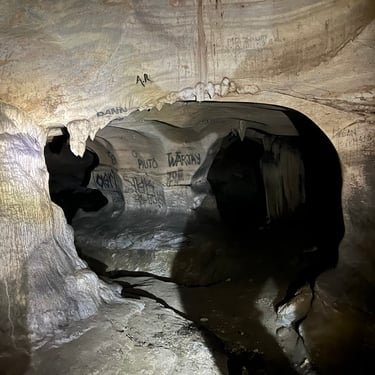


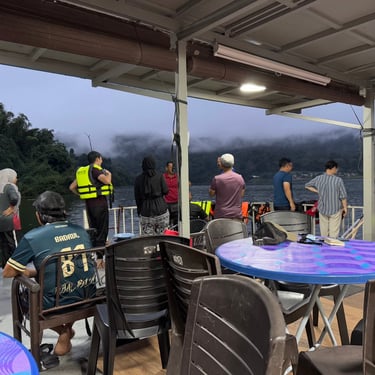
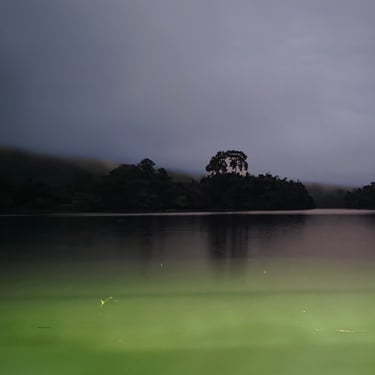
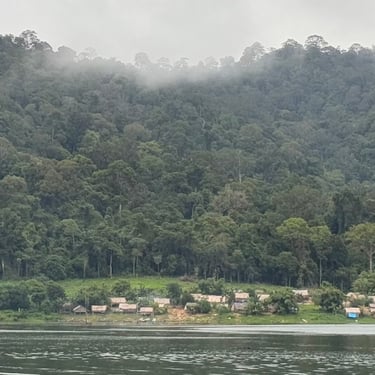
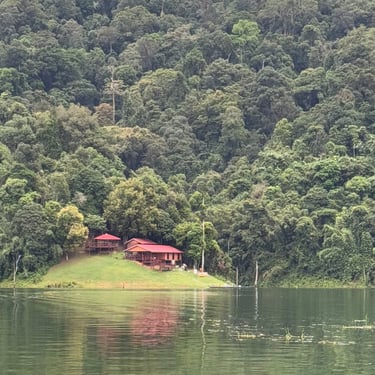
After two hours, we finally arrived at a houseboat on Tasik Temenggor in Royal Belum, Perak. The boat had three levels: the first for gathering and eating, the second for resting, and the third as an open space (we used it for praying and talking). We were very hungry and had lunch immediately without bathing. We enjoyed tea and coffee while admiring the endless lake view. After more than an hour, we stopped at one spot on Tasik Temenggor, shrouded by trees, small wooden houses and huts, local people on boats, and an infinite lake.
In the evening, we kayaked and swam in the lake. We laughed nonstop and felt pure joy. Later, we prepared for a barbeque dinner, chicken, fish, seafood, sausages, and rice. Luckily, fewer people ate fish that night, so I was very full and happy. The night continued with karaoke, they sang Chinese, Malay, and English songs. Some just relaxed and enjoyed the view. I was tired and decided to sleep early on the third level. I woke up at 5am to a dark and quiet scene. During breakfast, the boatman casually told me that we were anchored next to an Orang Asli graveyard, hahaha. I was too sleepy to think about it.

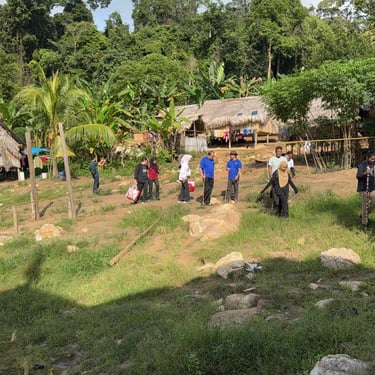
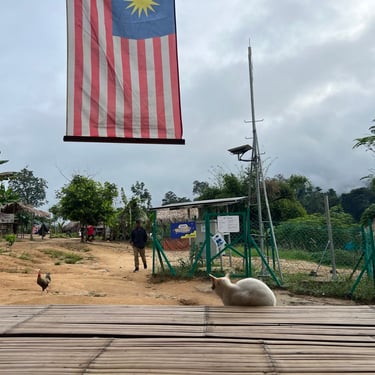
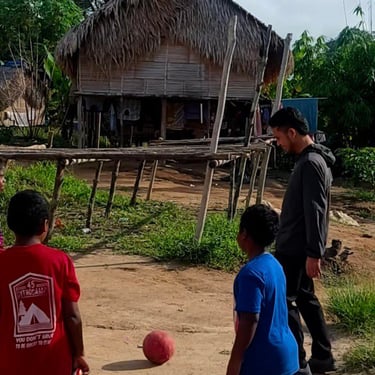
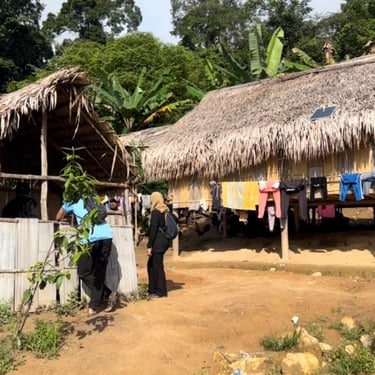
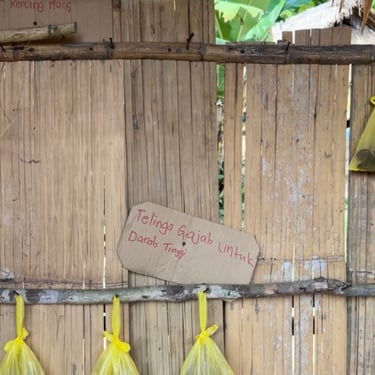
In the morning, we visited an Orang Asli settlement about two kilometres away. Although it was a school day, many children were playing outside. We were welcomed with a gathering call and listened to a briefing from Tok Batin about their culture and lifestyle. I played football with the kids. Some of us bought wooden tongkat and traditional medicines, and others gave snacks to the children. The settlement consisted of only about 25 houses. Their main activities include fishing, collecting forest products, and hunting using sumpit beracun. I was touched by their warm smiles.
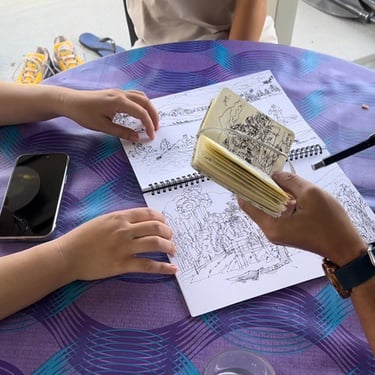
We briefly visited Sungai Papan in Royal Belum before returning to the boat. After washing up and having lunch, we sketched, chatted, and finally headed back to the bus. Most of us were exhausted and fell asleep. Late at night, we arrived safely at the faculty. I truly appreciate these happy moments with new friends. Kudos to my lecturer for inviting me, to the friends who were friendly, and to the bus driver for keeping us safe.
Alhamdulillah.

© 2026. sentuhanzulkarnaen. All rights reserved.